|
The magical and mysterious Tibet... I had dreamt of it for so long, before I finally got my chance to go in 1994, for the first time. Even with the risk of altitude sickness, I wanted to experience it. On the morning of August 4, when we landed in Lhasa Airport, the air was fresh, at 3,600m altitude. At first, we felt as though we were wearing marshmallow shoes and bouncing like astronauts on the moon. But soon after, we fell no more disturbances, except a kind of cervix pressure without consequence. The important thing was to rest the first day and move slowly.
We covered about 100 km by jeep from Gonggar Airport to the city, often stopping to take photos and admire nature. The surroundings seemed desert-like, but as soon as we set one foot down, toothless old men and charming children, who could only pronounce the word "bonbon" (candy) in French, surrounded us. We had not thought to bring any, my two CCTV colleagues and I, but we had apples and cookies for them.
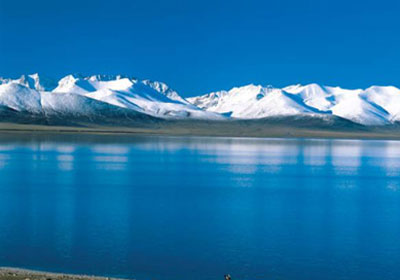
Ah! I could finally see with my own eyes the famed deep azure and small clouds of a brilliant white. In Lhasa, in summer, the sun shines until 4 p.m., then, with extraordinary punctuality, the sky becomes overcast in a second, and a thunderstorm erupts. Two hours later, everything returns to serenity.
Tibetans have always astonished me by wearing, in any season, a coat of mutton skin held at the waist by a large, woollen belt. They wear only one sleeve and put the other one in the belt for comfort while working. They don't seem to sweat in the summer or freeze in the winter. Monks too, in their wine-red tunics, always have one bare arm. Women wear long skirts, and, after marriage, a vividly coloured apron made of three sections with horizontal stripes. Later, I travelled to other Tibetan-inhabited areas such as Sichuan, Gansu, Yunnan and Qinghai, and discovered that the apron is present everywhere but they wear it in different ways, signifying different things.
On most days, women wear several kilos of jewellery: silver, copper, brass, or gold necklaces, decorated with coral, agate, turquoise, and other magnificent stones that are indigenous to Tibet. Their earlobes are stretched by the weight of their earrings, some with holes through which a drinking straw could pass.
The Tibetan population is composed of several sub-groups: Kangba, Anduo, Monba, Lhoba, Sherpa, etc. The Kangba people, originally from Sichuan, are the men who impressed me most, with their high stature and fierce bearing. Their long hair mingles with red or black woollen thread and pompons, which circle their heads.
Women are pretty and rotund but rarely fat, and men, generally well proportioned. Their skin is burnished copper by the sun and the summit winds. They look at you directly, and their smile penetrates you. Extroverts by nature, Tibetans are boisterous; they like to laugh, sing, and play late into the night.
Overall, only administrative services, enterprises, hotels and supermarkets are in big buildings. About 80 percent of the Tibetans build their own houses, preferring them to skyscrapers. What strikes me every time I enter a Tibetan house in Gansu, Sichuan, Yunnan, or Tibet is the space, something that could raise envy in many urban Chinese people!
Two things made the biggest impressions on me in Tibet. The first was a feeling of continuous surprise, engendered by their language, clothing, food, customs, art and crafts, and especially the life inspired by Lamaism and Bon religions. The symbols of these religions affected me -- temples, prayer mills, prostrations, piles of mani (flat stones), 108-bead rosaries, colourful flags printed with sutras, barley seeds sounding on copper plates, typical sound horns, all the objects that enhance the dialogue between man and divinity. And I thought, ‘How can some people think there is no religious freedom in Tibet? How dare they speak of cultural genocide?' But I sadly remembered that people like to repeat what others have said, without seeing for themselves.
Everything was different from other places of China where ethnic minorities live. Several Tibetans could speak Tibetan, Chinese and even good English. I expected to see more Hans since it was summer, when migrant workers from Sichuan go to Tibet for seasonal work in catering and tourism business mostly, and account for up to 10 percent of the population, while normally they are 5.9 percent (National Census 2000).
The other deep impression I got was of being in close contact with nature. Sitting on the grass writing my notes, I looked at the 40-cm-long goldfish practising their high jumps in the pond. A dragonfly rested on my notebook. It seemed that each plant looked at me and talked to me, and that each stone was alive. Yaks were new to me, and dogs impressed me by their sheer numbers. What a wonderful place, so close to the sky, to concentrate, write poems, and practise Qigong!
Tibetans respect animal life of any kind. If a fly is an annoyance in the house, they will guide it outside. If it falls into the water, they will save it. Even mice are left in peace, and live harmoniously with human beings.
Oh, Tibet! I surely did not have enough, and promised myself that I would return as soon as possible. |