|
|
|
|
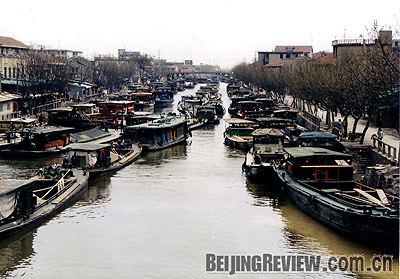
RIVER MERCHANTS: A waterway in Suzhou teems with cargo vessels in 1993 |
It's a common scene to see Chinese and foreign tourists eagerly snapping photos of Suzhou's riverside scenes as they drift along the city's serpentine waterway in a wooden boat, the boatman, dressed in traditional outfit, singing a sweet melody.
Renowned for its beautiful stone bridges, pagodas, tranquil gardens and winding waterways, Suzhou is a major draw for sightseers.
"It certainly wouldn't be a pleasant experience to tour the channels if there were still noisy and smoky cargo-vessels shuttling in the water passages," said He Duhui, Deputy Chief of the city's channel management station. In June, the local government decided that 18 of its 27 navigable channels in the city proper should be retired and returned to natural rivers, in which cargo ships are no longer allowed to travel.
It was the first time the city had ordered such a large-scale change in its river cargo transportation system. The 18 channels, making up two thirds of the city's overall channels and adding up to a total length of 58 km, were transferred from the jurisdiction of the local transport bureau to the water bureau. "They are only allowed to pass small cruise ships after the adjustment," the channel station official told Beijing Review.
Urban planning
Suzhou, on the lower reaches of the Yangtze River and on the shores of Taihu Lake in the province of Jiangsu, has a strong water transportation tradition with its crisscrossed network of channels, which develops the city into a commercial and trading center in southeast China.
In the early 1950s, many industrial enterprises in the city established their docks by the side of the channels. Until the 1980s, water transportation accounted for more than 60 percent of the city's total volume of cargo movement, contributing significantly to the region's economy, according to local transportation official Shang Qingcong.
|