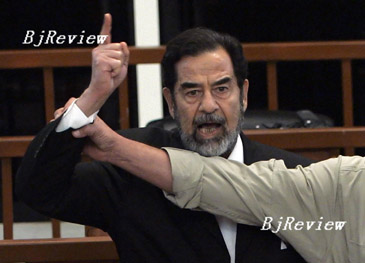
Saddam Hussein was finally hanged in Baghdad on December 30, 2006 for his crimes against humanity, marking the end of his regime that began in 1979.
"His victims included between 50,000 and 100,000 people who died in the Anfal military operation against Iraqi Kurds in 1987 and 1988 and tens of thousands of others who opposed him," the New York-based Human Rights Watch said.
The U.S.-led invasion of Iraq in March 2003 led to the removal of Saddam from power. The fugitive former leader was then captured by U.S. forces nine months later.
Saddam, 69, was convicted of crimes against humanity for the killing of 148 Shiite villagers and sentenced to death by an Iraqi tribunal on November 5, 2006. After his appeal was turned down, Saddam was sent to the gallows, just one day before the important Muslim festival-Eid al-Adha and buried in his hometown village of Tikrit beside his sons Qusay and Uday, who were killed in a battle with U.S. troops in 2003.
"It is an important milestone on Iraq's course to becoming a democracy," highlighted U.S. President George W. Bush, admitting that the death of Saddam "will not end the violence" in the country. "Many difficulties choices and further sacrifices lie ahead," said Bush.
The concerns and worries of the international community have increased as the clashes in Iraq between Sunnis and Shiites escalated. "His hanging will further fuel waves of anti-Americanism in the Muslim world," said Ishtiaq Ahmed, an associate professor of international relations at Quaid-I-Azam University in Islamabad.
Saddam's controversial life ended in a controversial death. A furor inside and outside Iraq has been unleashed by a video shot on a cellphone of Saddam being heckled and insulted by Shiite warders as he was led to the gallows. The video has since been available on the Internet. While the U.S. has publicly distanced itself from the video, Iraqi Prime Minister Nouri al-Maliki launched an investigation that has led to the detention of the alleged culprits involved in the film.
"The people of Iraq will remember that their darkest days were those during his [Saddam's] reign of terror."
Iraqi Foreign Minister Hoshyar Zebari
"'Do not take revenge on the invading nations and their people.' He also asked the people to unify in the face of sectarian strife."
Al-Dulaimi, Saddam's lawyer, told the Associated Press what message his client wanted to transfer to the Iraqi people
|