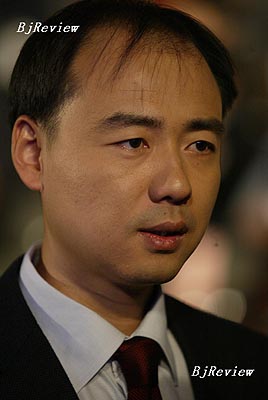
In a move that shows China is getting serious about bringing to light companies that flagrantly flout the regulations surrounding water pollution, a number of multinationals were recently blacklisted by a Beijing-based non-governmental organization. Ma Jun, Director of the Institute of Public and Environmental Affairs (IPE), led his group to update China's first-ever database of water polluters, Chinese Water Pollution Map, and published them at www.ipe.org.cn.
The initiative saw the figure of 33 offenders in 2006 rising to almost 100 violators this August. And it's not the small fry who are to blame. Well-known foreign companies like Pepsi-Cola, Samsung, 3M and General Motors, Kentucky Fried Chicken, Pizza Hut and Japanese-invested Kao, along with global chemical conglomerates, DuPont, Degussa and Ciba, are all named and shamed.
Based on information released by the State Environmental Protection Administration, the state environmental watchdog, over the past four years, Ma and his IPE group endeavored to raise public awareness of the severe increase in environmental degradation. "Multinational companies should not lower their environmental standards after entering China," warned Ma. "Their parent companies at home are often models of environmental protection work. But some of them seem to have slackened their efforts here in China."
Ma attributed this to weak law enforcement and supervision that have left loopholes for offenders to exploit. According to him, the key purpose of the database is to publish the names of polluting companies to pressure them into shouldering the responsibility for environmental protection.
Ma's credentials in the field of environmental work are impressive. He began a journalistic career in 1993 at the Beijing Bureau of Hong Kong's South China Morning Post, which gave him an opportunity to personally witness China's environmental woes. In 1999, Ma's book China's Water Crisis, in which he investigates China's dwindling water resources in its seven biggest drainage areas, was hailed as the first real environmental wake-up call in the country.
In 2004, Ma entered Yale University as a visiting scholar. After making a comparison between China's environmental protection system with that of the Western world, he found that insufficient public involvement and accountability have been the major cause of China's current environmental problem. His initiatives inspired him to establish IPE, which is dedicated to information release and pollution prevention.
At the end of 2006, Ma was awarded the Green Chinese title and also selected as one of the top 100 influential people of 2006 by Time magazine. |