|
Engineering Excellence

The British Royal Academy of Engineering (RAE) has recently awarded its International Medal to Xu Kuangdi, President of the Chinese Academy of Engineering, who the RAE said "developed a reputation as an international expert in the manufacture of iron and steel in an accomplished academic career."
The International Medal is awarded occasionally to an individual resident outside the EU for his or her outstanding and sustained personal achievement in the broad field of engineering, including commercial or academic leadership, said a RAE news release.
Xu, 71, had a 30-year-long teaching career until 1989 after he graduated from the Beijing Institute of Iron and Steel Engineering, and won two national awards for his achievements in designing a stainless steel pipe for aerial purposes and improving the quality of steel used in military bearings.
After a seven-year tenure as mayor of Shanghai, Xu has served as president of the Chinese Academy of Engineering since 2002. In 2003, he was elected an international fellow of the RAE.
"In the course of his very successful career in public life and academia, Professor Xu has combined a commitment to engineering excellence with visionary and dynamic leadership," the RAE news release said.
Terror Buster Appointed
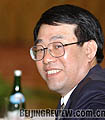
Yang Huanning, an antiterror expert, has recently been appointed vice minister of public security. The appointment was announced on June 12.
This is the second time that Yang, 51 who holds a Ph.D. in law, assumed the post, following the service between March 2003 and January 2005. In his first tenure, he was a member of the Central Government's task forces dealing with "Xinjiang independence" and "Tibet independence" activities, and accumulated rich experiences in related fields.
Before the latest appointment, Yang worked in northeast China's Heilongjiang Province, responsible for local legal and security affairs.
China has pledged to host a safe Olympic Games, but senior police officers also warned of "real terrorist threats." The Ministry of Public Security announced in April that it had foiled two plots of terrorist attacks in Beijing and other inland cities during Olympic Games.
Justice Denied

Wan Aihua, a 78-year-old former sex slave of Japanese soldiers during World War II, wrote to Japanese Prime Minister Yasuo Fukuda on June 13, asking for redress from the Japanese Government for her sufferings more than 60 years ago.
In the letter, Wan severely criticized Japan's refusal to apologize to wartime rape victims and compensate them, despite the fact that courts at various levels in Japan had admitted the Japanese army's crimes during the country's aggression against China in the first half of the 20th century.
In 1998, Wan and nine other former sex slaves filed a lawsuit in Japan, demanding the Japanese Government's state reparation of 200 million yen. Though both first- and second-instance courts justified the demand, they refused to issue judgments in favor of Wang and the other victims allegedly because the Japanese army's crimes in World War II were committed before the country's current law on state compensation went into effect. The Japanese Supreme Court also dismissed the case in November 2005.
More than 200,000 women from China, Korea and other occupied territories were kidnapped or coerced into sex slavery by Japanese soldiers in World War II under the "comfort women" system that was endorsed by the Japanese Government and operated by the army. |