|
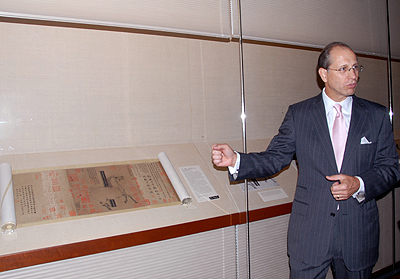
Maxwell K. Hearn, Curator in the Department of Asian Art at the Metropolitan Museum of Art, introduces a Chinese painting to be presented at the "Anatomy of a Masterpiece: How to Read Chinese Paintings" exhibition
Many believe that great art speaks for itself. But Maxwell K. Hearn, Curator in the Department of Asian Art at New York’s Metropolitan Museum of Art, doesn’t think so. “Great art also needs illustration -- profound illustration.” he said. For this reason he organized a new exhibition of Chinese paintings and calligraphy for the museum beginning March 1, with the first ever theme of “Anatomy of a Masterpiece: How to Read Chinese Paintings.”
The installation lasting till August 8 presents visual, rather than textual, analysis of what makes a work of art a masterpiece by juxtaposing Chinese paintings with enlarged photographic details.
A total of 36 paintings and calligraphy pieces from the museum’s collection, including figures, landscapes, flowers, birds and religious subjects, which date from the Tang Dynasty (the mid 8th century) to Qing Dynasty (the early 18th century), will be studied during the exhibition.
According to Hearn, the main purpose for this exhibition is for education. So under his organization, each gallery of this exhibition focuses on as few as two or three works and tries to draw attention to telling details of style, composition or content of the masterpieces.
In addition to the captions and walking audio guide during the exhibition, the museum will also publish an illustrated catalogue How to Read Chinese Paintings: The Metropolitan Museum of Art to help visitors better understand Chinese arts. The catalogue is to be distributed by Yale University Press.
First opened in 1981, the Metropolitan Museum’s Galleries for Chinese Paintings and Calligraphy has been displaying the museum’s collection of Chinese art on a rotational basis of about half a year, each time with a different theme.
(Reporting from New York)
|