|
| China |
| Autumn splendor: The colorful foliage of the Qinling Mountains | |
|
|
|
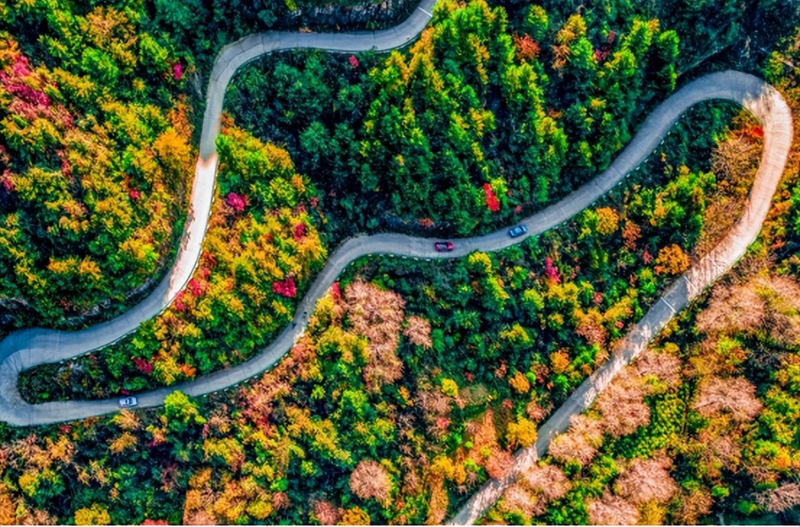
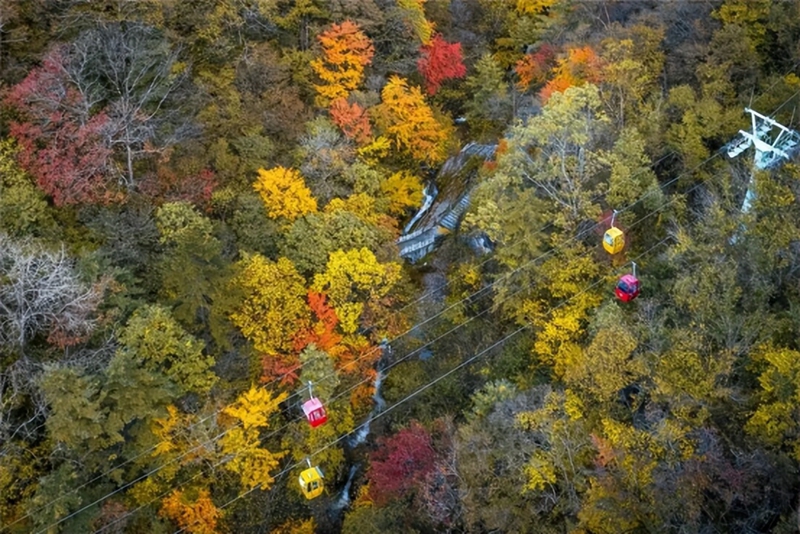
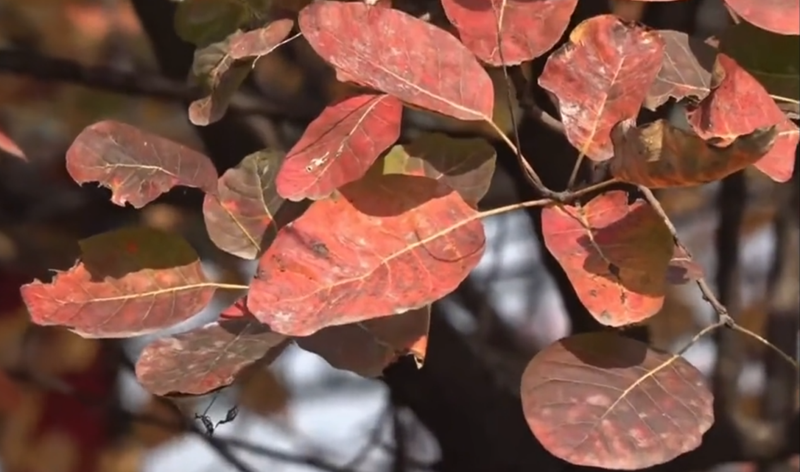
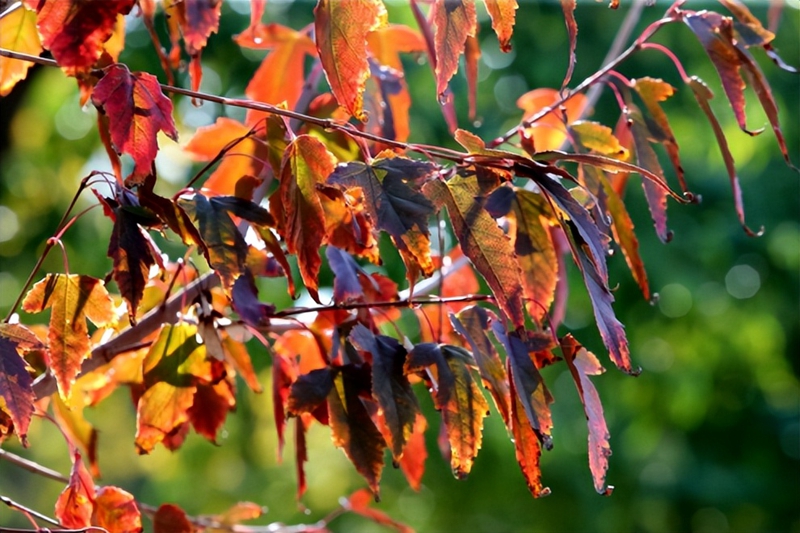
In late autumn, the northern slopes of the Qinling Mountains in Xi’an City, Shaanxi Province, north China, reach their most vibrant season. Hues of red creep up the high ground while various shades of yellow spread below, transforming the forests into a tapestry woven by native trees—the Liaodong oak, smoke tree and maple tree, to be exact. Who’s coloring the mountains? The Liaodong oak dominates the broadleaf forests at elevations of 1,800-2,200 meters and drives the warm yellow tones of autumn. Its thick leaves change from green to golden and yellowish-brown, flecked with pale green and light orange, spreading in sweeping seas of warm colors. Its acorns, rich in starch and ripe each September, are a staple winter food source for squirrels, birds and small mammals, sustaining dozens of wildlife species throughout the bitterly cold months. The smoke tree is the star of Qinling’s red foliage. A deciduous shrub or small tree with oval leaves, it turns brilliant red under autumn’s cool temperatures and sharp day-night swings. It grows in dense patches on shallow slopes, blazing like crimson clouds across the hillsides, and thrives even in thin, poor soil. The maple tree, with its distinctive palmate leaves, adds another splash of color to the autumn landscape. Its leaves turn orange and scarlet, but these trees are mostly scattered throughout the forest, rarely forming large continuous stands. The spectacular scene of “mountains set ablaze in red” is therefore no single species’ work— it is the interweaving of the smoke tree’s crimson, the Liaodong oak’s gold and the maple tree’s orange. Together, they paint Qinling’s autumn. Autumn creeps downhill Qinling’s dramatic elevation range creates a clear temperature gradient, so foliage color shifts first at high altitudes and later at lower ones. Higher elevations cool earlier and experience greater temperature swings, causing the leaves there to turn first. As temperatures continue to drop, autumn color cascades from peaks down to valleys, layering the landscape and stretching the viewing season across the northern slopes. The large continuous red expanses are primarily smoke tree, while maple trees are mostly scattered accents, and foliage composition varies by location.
Beyond the scenery These autumn trees are more than scenery—they are the bedrock of Qinling’s ecological stability. The deep roots of the Liaodong oak and the smoke tree’s tolerance for barren slopes anchor the soil, reducing erosion from rain. The oak’s acorns feed wildlife through winter, while its dense canopy shelters small animals. Fallen leaves decompose into organic matter that enriches the soil and nurtures understory seedlings. Together, these mixed foliage species form a stable forest community that conserves water, moderates the local microclimate and sustains Qinling’s complete food chain.
|
|
||||||||||||||||||||||||||||
|