
|
| Opinion |
| Dealing with the Trump Card | |
| Scholars analyze the dramatic result of the U.S. election | |
|
|
|
Editor's note: Every time the occupants of the White House change, China-U.S. relationships undergo a change as well. Four renowned Chinese scholars on American studies and bilateral relations analyze the dramatic result of the U.S. presidential election and its implications at an event in Tsinghua University on November 9: Republican nominee Donald Trump's election as the next U.S. president caught most observers and media in the United States off guard, and in China as well. How did it happen?
Clinton's supporters mostly came from the elite in big cities and Wall Street investors who were outnumbered in the ballot though they had a louder voice than Trump's voters in the media. Perhaps that led to the poll results favoring Clinton before election day. But poll results are not votes. Furthermore, Clinton's email scandal and the ensuing FBI investigation did some damage to her reputation. Many Democrat supporters and swing voters began to doubt her honesty. That created a big problem for her.
Also, we must not forget that the pursuit of change is deeply rooted in U.S. culture and values. Change is always an issue that U.S. voters care about. Eight years ago, Obama beat his opponents at the election by convincing American voters with his promise of ushering in "Change we can believe in" and the following chant, "Yes, we can." But even with two terms, Obama did not bring the substantial change the common people in the United States had expected. An endless partisan struggle almost ruined his second term and most of his reform plans failed because of opposition by the Republican-controlled Congress. While most voters were hoping for a real change, Clinton provided few ideas to satisfy them. They could not see a potential change in her campaign speeches and TV debates. And she did not appear to take the discontent of unprivileged voters seriously. On the other hand, Trump was a candidate with a new face, though he was controversial and showed little respect for mainstream media in his campaign. Trump assured conservative supporters of the change they wanted. As a result, swing voters cast their ballot for him.
If it had happened in the mid-90s, when the United States was at the peak of prosperity, voters might have bought her center-left proposals on the economy, employment and the immigrant issue. But currently, the mood is increasingly populist and isolationist in the United States. There is also a strong rise in anti-establishment sentiment. The majority of Americans were tired of conventional candidates who were politicians. Under such circumstances, Clinton did not appeal to white working class voters in a divided United States. The silent majority chose to stand with Trump. Trump had a number of identities—real-estate tycoon, billionaire, TV show host. But he has never worked in government. What will that inexperience mean for U.S. politics?
A majority of the American people have been unhappy with the economic decline caused by unbalanced economic policy and systematic failure in the financial sector since 2008. In the past, people from developing countries often complained about globalization. Currently, we see growing discontent among people from developed countries. But neither the Obama administration nor Wall Street took it seriously, and they lost the chance to reform those defective institutions. Under Trump, the United States is likely to rebound in protectionism and isolationism, which will cause fluctuations in both the United States and the rest of the world. Da: No doubt, Trump's winning will have an impact on U.S. politics, the United States' leadership role in the world and its ties with the world. His lack of political experience and radical thoughts on domestic and foreign affairs will bring uncertainty. What's more, there is much opposition to him in the Republican Party itself. It is still open to question if the new president will get along with the Congress controlled by his own party and if he will have to make more compromises in the future. Of course, the way the U.S. political system has been designed to restrict the powers of the executive will serve to reduce the uncertainty. Anyway, the U.S. political system will undergo a test during Trump's presidency. Which way will China-U.S. relations head during Trump's presidency? Shi: Trump's win reflects a new trend in the world. Since the global financial crisis in 2008, populism in politics, protectionism in trade and isolationism in diplomacy have been increasing. This is evident in Britain's exit from the European Union and the confrontation between the West and Russia. The world we used to be familiar with is becoming more incomprehensible. China-U.S. relations will also be influenced by these changes. Trump stated strong protectionist views during the campaign. So he will do something to fulfil his promise, which will have an impact on the economic ties between China and the United States. Chu: Based on the experiences over the past four decades, no matter who became U.S. president, and no matter what the president tried to change in the China policy, the U.S. Government eventually had to get back to the track of developing relations with China. The reality of China-U.S. relations won't allow Trump to reverse much. Da: Compared with Clinton, two factors could make Trump's administration favorable to China after he assumes office. Trump is not as strong as Clinton in ideology. And he was a businessman who had to be pragmatic in his work. These two factors might create more opportunities for cooperation between China and the United States in the future. Furthermore, Trump seems to have no clear policy on the South China Sea issue, which is a problem impeding China-U.S. relations. The tension in the South China Sea has now diminished somewhat. In the near future, Trump will be preoccupied with domestic affairs and relations with allies and is unlikely to devote too much attention to conflicts in other regions. Copyedited by Sudeshna Sarkar Comments to baishi@bjreview.com |
|
||||||||||||||||||||||||||||
|





 Jia Qingguo, Dean, School of International Studies, Peking University: According to ballot statistics, Trump won the support of the Midwest states while Hillary Clinton got votes from parts of the East and West Coast. I think Trump's triumph is the victory of the American majority comprising conservative whites, grassroots villagers, and unemployed workers, especially in the old steel towns of the Rust Belt. These people were eager for a political change that would improve their lives.
 Chu Shulong, Deputy Director, Institute of International Development & Strategies, Tsinghua University: Trump's winning, though beyond my expectation, makes sense. The result is not only a personal failure for Clinton, but also means the majority of the people disapprove of Barack Obama's work.
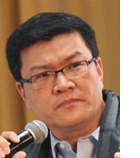 Da Wei, Director, Institute of American Studies, China Institutes of Contemporary International Relations: While Trump was approaching triumph, the stock market tumbled. That reflected the disappointment and fear of the elites and Wall Street. They did not see the trend simmering beneath the surface of U.S. society. In the campaign, Clinton always emphasized her experience as a first lady, senator and secretary of state. Both she and the media forgot one thing: The times are changing.
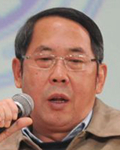 Shi Yinhong, Director, Center for American Studies, Renmin University: In view of the election result, Trump's lack of political experience really didn't matter. He not only beat Clinton, the Democrat contestant, but he defeated other Republican candidates as well. Nearly all of them have experience serving in the public sector as governors or senators.


