
|
| China |
| Young people participate in cultural heritage protection | |
|
|
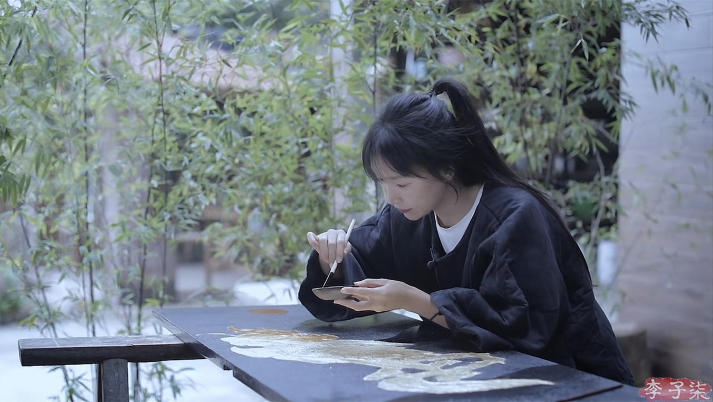 Internet celebrity Li Ziqi makes lacquerware on Douyin, China’s version of TikTok SCREENSHOT
Cultural heritage, far from a static collection of ancient artifacts and practices, is a living legacy undergoing a renaissance, driven by the ingenuity and passion of younger generations. This transformation is spearheaded by individuals who bridge the gap between tradition and modernity, weaving the intricate threads of the past into the fabric of contemporary life. A testament to this evolving landscape was the recent Beijing Culture Forum, held in the Chinese capital on September 22-23. The forum brought together more than 600 guests from 44 countries and regions to discuss cultural heritage protection and mutual learning among civilizations. At the forum, young people, including a digital creator, an academic and an international observer, offered distinct perspectives on how heritage can be kept alive in the digital age. The digital storyteller of artisanal life 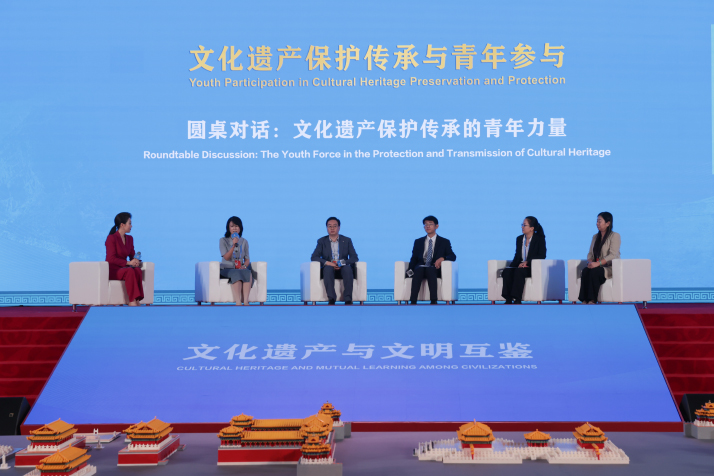 A roundtable discussion during the Beijing Culture Forum’s parallel session, titled Youth Participation in Cultural Heritage Preservation and Protection, in Beijing on September 23
Among the most compelling voices at the forum was that of popular Chinese content creator Li Ziqi from Sichuan Province in southwest China, who is considered by many fans to be a trailblazer in the digital dissemination of Intangible Cultural Heritage (ICH). She has redefined how traditional Chinese crafts and agricultural wisdom are perceived and appreciated on a global scale. Her meticulously crafted short videos, often spanning seasons for a single production, offer a poetic and immersive glimpse into a Pastoral China—an idealized yet grounded portrayal of rural life imbued with profound respect for artisanal skill and the rhythm of nature. Speaking at the Youth Participation in Cultural Heritage Preservation and Protection parallel forum on September 23, she reflected on cultural dissemination in the Internet age. "The Internet age has equipped every one of us with the 'clairvoyant eyes' and 'all-hearing ears' once found only in myths," Li said. "It takes only a second to know what someone on the other side of the planet is doing or saying," she added, noting the value of digital tools for global cultural dissemination. Li said when she first began her journey as a content creator, she had no grand "cultural" framework. She simply presented traditional local cuisine and how her diet followed the cycle of the seasons. Later, she expanded her scope to include domestic chores and crafting, such as making shoes for her grandmother. By 2016, she had made a conscious pivot toward the rigorous study of ICH skills. In those early days, few traditional masters had a digital footprint. She had to scour archives and study official documentaries, to truly grasp the techniques and show them online. In a viral video released in November 2024, Li brought global attention to a distinctive Chinese traditional craft: lacquer art. Using the carved lacquer technique, she restored an old wardrobe for her grandmother. Li's video offered a detailed glimpse into this complex journey, highlighting the extreme precision and dedication required at every step. A technique featured, known as Carved Lacquer Hidden Flowers, is a testament to painstaking craftsmanship, demanding dedicated effort. Her process begins with harvesting and preparing lacquer sap from trees, which is then applied in numerous layers, often 40 to 50, each meticulously polished and given plenty of time to dry. By demystifying complex crafts, she has transformed heritage from "inaccessible" to "perceptible." The academic architect of accessible narratives While the digital creator brings the beauty of handcraft to the audience, others tackle the intellectual rigor required to make history accessible. Among them is Hu Zhengyang, an associate professor at the School of Marxism of the Central Academy of Drama, whose work is dedicated to unraveling the historical and cultural significance of the Forbidden City, now the Palace Museum. The complex, completed in Beijing in 1420, was the imperial palace of the Ming (1368-1644) and Qing (1644–1911) dynasties. Since 2018, Hu has been producing educational short videos on Douyin, China's version of TikTok, to promote the history, architecture and cultural artifacts of the Forbidden City. To date, he has published over 1,100 videos, covering everything from the palace complex's seasonal beauty to the intricate details of its buildings and the stories behind its treasures. Hu handles the entire creative process, from filming to final editing, independently. His unique approach and storytelling have earned him a following of over 2 million on the platform. Sharing the stage at the same parallel session at the Beijing Culture Forum, Hu emphasized making cultural content both understandable and desirable for young audiences. He said that while traditional classroom pedagogy excels at systematic instruction, digital communication requires starting from specific heritage sites like the Forbidden City, transforming history into vivid stories and tangible details that can be understood by youth from all cultural backgrounds. In addition to publishing videos on Douyin, Hu has integrated Forbidden City culture into his courses. He launched an online course that interprets the Forbidden City through the lens of drama. Using popular TV dramas like The Legend of Zhen Huan, which tells the story of an emperor's concubine surviving in a palace full of cunning schemes and deceit, as entry points, he deconstructs the differences between fictional TV dramas and historical fact. His commitment extends to the public through guided tours—free of charge. Whether he is leading visually impaired college students through the palace, or teaching children with autism about the animal statues on the palace roofs, he proves that cultural heritage is a language that can be spoken by everyone. The international perspective  Internet celebrity Li Ziqi makes lacquerware on Douyin, China’s version of TikTok
The forum's dialogue was further enriched by perspectives from those who view China's heritage through an international lens. Stuart Wiggin, a British content creator who has lived in China for nearly 20 years, offers a unique vantage point on how to make China's heritage "come alive" for overseas viewers. Wiggin has been capturing and sharing his life in China with a global audience since 2012. By blending his local experience with a British sense of humor, his videos have amassed over 1 billion views worldwide. At the Cultural Heritage and Artistic Creation parallel forum on September 23, Wiggin said his experience has shown that China's rich heritage is most vibrant in the daily lives of ordinary people. When filming a traditional festival, he avoids lecturing on centuries-old origins, choosing instead to show how locals are currently celebrating it. For Wiggin, the success of cultural communication is measured by the viewers' reaction. If a video can spark an urge in someone who previously knew nothing about China to exclaim, "I want to come to China to see it for myself," then that is a successful act of heritage preservation. Individuals like Li, Hu and Wiggin are creating new narratives for China's cultural heritage, ones that are as enduring as the ancient crafts they celebrate and as modern as the digital platforms they call home. Copyedited by Elsbeth van Paridon Comments to jijing@cicgamericas.com |
|
||||||||||||||||||||||||||||
|