
|
| China |
| A fight for the soul of cultural tourism | |
|
|
 LI SHIGONG
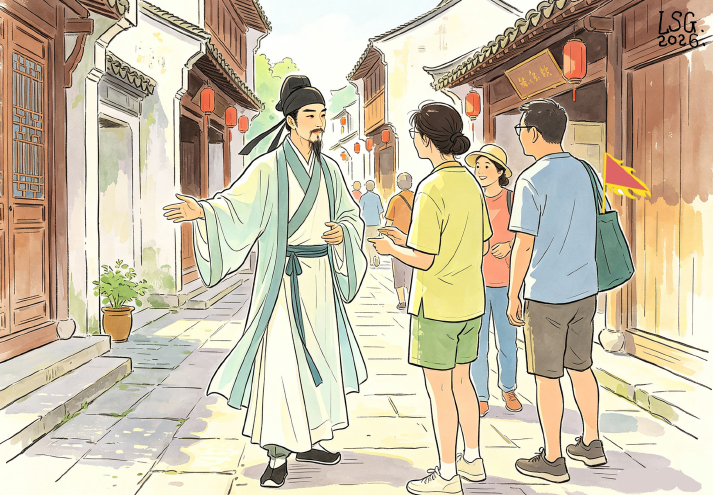
'Non-player character (NPC)," originally a term from video games, now widely refers to live performers who are trained to interact with tourists as specific characters in China's scenic spots. Today, NPCs are increasingly becoming a "standard feature." Since the beginning of this year, ahead of every holiday season, battles for NPC talent have been intensifying. During the May Day holiday on May 1-5, NPCs emerged as one of the most eye-catching highlights in cultural tourism, with many travelers making special trips to a city or a scenic spot just to see these new top attractions. However, recent news reports have pointed out "borderline" behaviors, teetering between entertaining and embarrassing, by NPCs in some scenic areas. The topic quickly resonated with the public, not just because of a few outrageous cases, but because it has touched on a common issue currently facing the cultural tourism industry: What kind of attention should scenic spots be pursuing? Zhang Tong (Hebccw.cn): NPCs are designed as a key part of immersive cultural tourism. Through role playing and interactive design, they transform abstract cultural content into participatory, tangible experiences, thus enhancing visitor engagement. However, some scenic spots are gradually turning NPCs into mere attention-seeking tools, as they attempt to generate buzz through suggestive or even mildly vulgar content. While such gimmicks may seem "entertaining" on the surface, they are actually eroding the fundamental standards of cultural tourism products and damaging the industry's overall image. This is especially concerning given the many minors visiting these scenic spots. In striking contrast to the above-mentioned chaos, what is being practiced at Hetou Old Street in Tangshan, Hebei Province, deserves attention. The wildly popular NPC "Li Bai," based on the famous Tang Dynasty poet (701-762), relies on no exaggerated physical interactions. Instead, he engages in improvised conversations with visitors centered on classical poetry. Drawing on a solid foundation of cultural knowledge, the performer weaves classical poetic sentiments into contemporary contexts. When visitors talk about anxiety over being urged to marry, he responds with verses about life choices. When someone confides work-related stress, he draws on the mindset of ancient scholars to offer perspective and reassurance. "Borderline" content may indeed lower the cost of going viral, but it cannot go too far. Once public sentiment shifts or audience fatigue sets in, its popularity will quickly fade. In contrast, the culture-driven approach may take longer to bear fruit, but it will keep accumulating value over time. Editorial (Gmw.cn): Through improvised interactions, NPCs transform static attractions into dynamic, living stages. Tourists are no longer mere spectators but become "participants in the story." Their spontaneous sharing and word-of-mouth promotion on social media drive growth in both online visibility and offline foot traffic for scenic areas. As visitors spend more time at a destination, a wider range of consumption scenarios and opportunities are naturally activated. How can the "blooming season" of NPCs in scenic areas be extended? The only way is to let go of the obsession with "quick success" and adhere to a long-term approach, continuously investing in cultural content, innovation and brand building. This obviously requires lasting efforts from all sides, including NPC practitioners, scenic spots and regulators. BR Copyedited by Elsbeth van Paridon Comments to yanwei@cicgamericas.com |
|
||||||||||||||||||||||||||||||
|