
|
| China |
| Smash, stab, stomp... fun or a step too far? | |
|
|
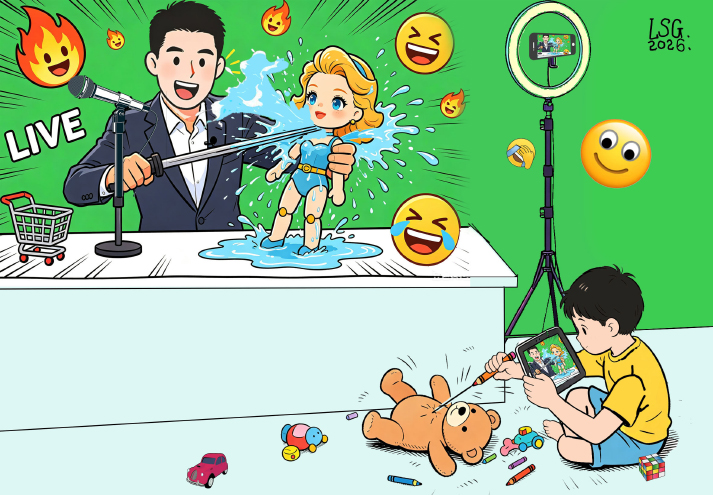 (ILLUSTRATION BY LI SHIGONG)
Should a bizarre, baby-shaped stress-relief toy that invites smashing, stabbing and stomping be celebrated as emotional venting or condemned as normalizing violence? The viral "Natasha" doll, ugly-cute, indestructible and oddly popular, has ignited heated online debate. The trend reportedly started when a Chinese influencer began humorously "raising" the soft silicone doll as a substitute baby amid social pressure over marriage and childbirth. A clip showing the doll flattened on the ground unexpectedly went viral, spawning thousands of copycat videos. While many adults defend it as harmless venting, schools have banned it for fear that children cannot distinguish toy abuse from real cruelty. Liu Zhongyu (Xiaoxiang Morning Post): Natasha's popularity does not come from being beautiful—it comes from being ugly in exactly the right way. Over the years, "ugly-cute" has quietly become an attraction in emotional consumption: Perfection makes people tense, while sloppiness relaxes them. When you hold a crooked, roughly made doll with a tired, defeated expression, you feel no guilt squeezing, throwing or stomping on it because it already looks that way. That appearance hits exactly the psychology of people who are tired of pretending. More importantly, Natasha is nearly indestructible. No matter how hard you press, smash or step on the doll, it always bounces back. Every deformation delivers instant feedback, and every rebound feels like a reset. For adults carrying daily pressures from work and life, pressures they cannot vent about to colleagues or family, Natasha offers a low-cost, consequence-free emotional trash can. Squeeze it, and you release tension; watch it return to shape, and it's as if nothing happened. Yes, the extreme stunts online, injecting water, stabbing and trampling, are over the top. But that is simply how viral content works: The more creative and extreme, the more attention it gets. However, we must draw a clear line for children. Schools are right to ban Natasha on campus because minors cannot distinguish violence against a toy from violence against a living being. Repeated exposure may desensitize them. The solution is not to ban the toy for adults, but to teach boundaries. Stress relief is necessary; violence should never become the only option. Shao Dan (Rednet.cn): Emotional toys exist to heal, not to encourage cruelty. Natasha's ugly-cute appearance resonates with young people's genuine need for stress relief, especially given that the 2024 edition of the Report on National Mental Health Development shows depression peaks among those aged 18-24, with 6.5 percent of adults experiencing persistent symptoms of depression. The fast pace of life, workplace pressures and daily anxieties are real. But this trend is deeply troubling. As Natasha's popularity exploded, some creators, under the banner of "stress relief," began staging exaggerated, shocking and even violent scenes. Merchants eagerly followed, amplifying destructive gimmicks to boost sales. Blind online imitation and endless trolling have turned a potentially healing object into a tool for vulgar entertainment. This not only betrays the original purpose of stress-relief toys, companionship and comfort, but also encourages irrational consumption and lowbrow culture. The core of emotional consumption is psychological comfort, not an unhinged carnival of shock value. Emotional release must respect basic civility and moral boundaries. For the cultural market, this means genuinely addressing young people's anxieties without resorting to cheap thrills. For young individuals, while a quirky toy might occasionally lighten the mood, it is important to build long-term, healthy emotional regulation through sports, social interaction and reading. Copyedited by Elsbeth van Paridon Comments to yanwei@cicgamericas.com |
|
||||||||||||||||||||||||||||
|








