
|
| China |
| China's strategic blueprint for youth-friendly cities | |
|
|
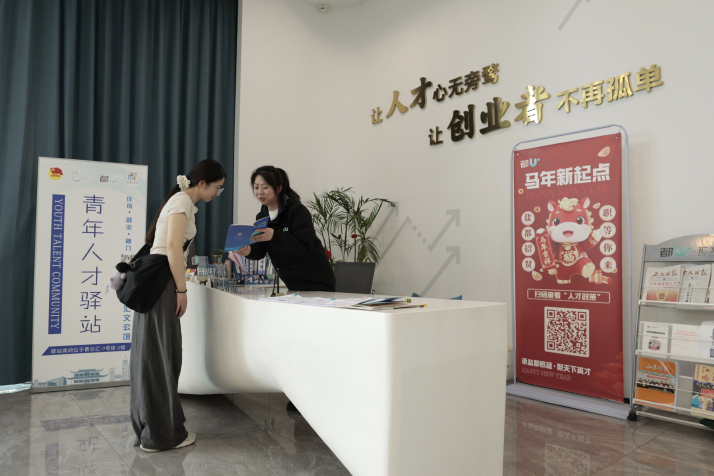 A job seeker (left) inquires about the procedures for moving into a personnel apartment in Yancheng, Jiangsu Province, on May 13 (XINHUA)
In China's rapidly evolving urban landscape, a shift is underway: the transition from sheer urban expansion to a people-centered model that prioritizes the wellbeing and potential of its youth. With the national urbanization rate reaching 67.89 percent by the end of 2025, the challenge has moved beyond infrastructure and skyline growth to focus on quality, inclusivity and sustainable human development. In response, China is doubling down on a comprehensive, nationwide strategy to build "youth-oriented cities"—urban environments designed to ensure that young people can find employment, secure affordable housing, and cultivate a genuine sense of belonging. In April, 15 departments, including the Communist Youth League of China, the Cyberspace Administration of China, the National Development and Reform Commission and the Ministry of Education, rolled out a new policy package aimed at creating youth-friendly cities, as part of broader efforts to build people-centered modern cities and boost the vitality of society. The measures seek to transform cities into hubs where young people can pursue high-quality development, enjoy better living standards, and actively participate in governance, the document noted. This initiative is the latest chapter in a journey that began in 2022, when 17 departments first issued the Opinions on Launching Pilot Projects for Building Youth-Friendly Cities. While the 2022 framework laid the groundwork for local experimentation, the new guidelines represent a significant evolution. The focus has shifted from "pilot exploration" to "systematic promotion," and from "meeting basic needs" to "enhancing development quality." The objective is clear: to integrate youth development into all aspects of urban planning, construction and governance. By treating youth development as a core metric of urban success, the government aims to create a mutually reinforcing cycle where vibrant, supported young people drive the high-quality development of the cities in which they reside. 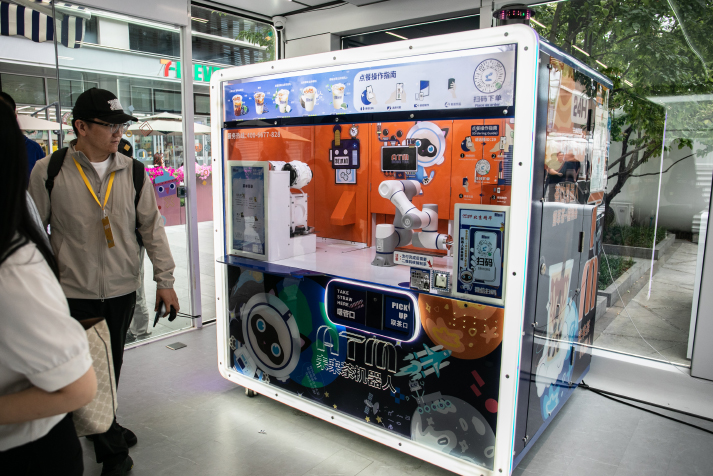 An unmanned vending machine within the AI Genesis Community in Beijing on June 10 (VCG)
Bridging the employment gap For millions of young graduates, the transition from campus to the workforce is the most daunting hurdle. Recognizing this, Hefei in Anhui Province and other cities have pioneered talent-retention strategies. The city's Hefei Invites You! campaign has become a gold standard for graduate recruitment. By hosting high-profile job fairs that bring together thousands of high-quality positions, the city offers more than just jobs; it provides a comprehensive support network, including policy consultations and career guidance, ensuring that new arrivals feel welcomed and informed. The scale of these efforts is immense. Over the past three years, Hefei has hosted 62 major job fairs, providing 342,000 employment opportunities in total. Yang Dawei, Director of the Hefei Municipal Human Resources and Social Security Bureau, told CCTV.com: "In the past three years, Hefei has attracted over 1.05 million university students." Through long-term cooperation with more than 60 renowned universities nationwide, the city has created a sustainable talent pipeline, inviting youth to build their careers in the city. Beyond the job fairs, Hefei has introduced the 3-km Employment Circle, a digital platform through which young people can map out nearby companies and job opportunities within a 30-minute walk (roughly 3 km) of their homes. The foundation of belonging A stable place to live is essential for young people to put down roots in a city and strive for success. However, in many large cities, achieving this goal is not easy. Acknowledging that high rental costs often act as a barrier to settling down and building a career, cities are implementing creative measures for housing security. In Chengdu, Sichuan Province, the Youth Personnel Dormitory program offers a compassionate landing for those just starting their job search. By providing up to 30 days of free accommodation, the city eases the initial financial burden on recent graduates. Administrator Shen Juan, who has witnessed the program grow from having surplus capacity to being in high demand, noted that over half of the youth who have utilized these dorms have gone on to secure employment and settle in Chengdu. Beijing is tackling the issue with equal rigor, particularly in the Beijing Economic-Technological Development Area in the city's Yizhuang area, better known as Beijing E-Town. To support young talent, the local government has introduced a tiered housing security system. This includes seven days of free lodging for job seekers, three months for interns and a preferential three-year rental scheme for those employed. Under this model, rent is scaled at 25, 50 and then 75 percent of the market price across the three years. This graduated approach allows young professionals to transition from the vulnerability of their first job to the financial stability of a multi-year career, ensuring that housing does not derail their professional ambitions. Empowering growth Youth-friendly cities are now offering more than basic services; they provide platforms for growth and innovation. In the era of AI, this means fostering ecosystems in which risk-taking is encouraged. The AI Genesis Community in Beijing's Haidian District, a 3-square-km hub, serves as a blueprint for this empowerment model. Currently, over 74 percent of the companies in the community are AI-focused, creating a complete industrial loop from large language models to robotics. Gao Haichuan, an entrepreneur and Tsinghua University graduate, sees the unique value of this cluster: "Whether doing research and development or business, you don't need to leave the community. Our clients and suppliers are here." By providing open workstations and hosting weekly networking roadshows, the community acts as a "charging station" for innovators, turning the daunting process of starting a company into a collaborative, supported journey. The transformation of China's urban centers is a testament to a broader vision: a nation that grows stronger by investing in its young people. Hefei's recruitment networks, Chengdu's welcoming dorms and Beijing's innovation hubs all recognize that meeting the needs of individuals is key to the development of the city. When the state provides the channels, the housing and the stage for innovation, young people are empowered to move beyond survival and into the realm of ambition. This bidirectional relationship, in which a city nurtures its youth and the youth, in turn, provide the city with energy, creativity and progress, is becoming the new cornerstone of China's modern urban strategy. (Print Edition Title: Empowering the Next Generation) Copyedited by G.P. Wilson Comments to jijing@cicgamericas.com |
|
||||||||||||||||||||||||||||||
|








