
|
| China |
| Should platforms compensate victims of virality? | |
|
|
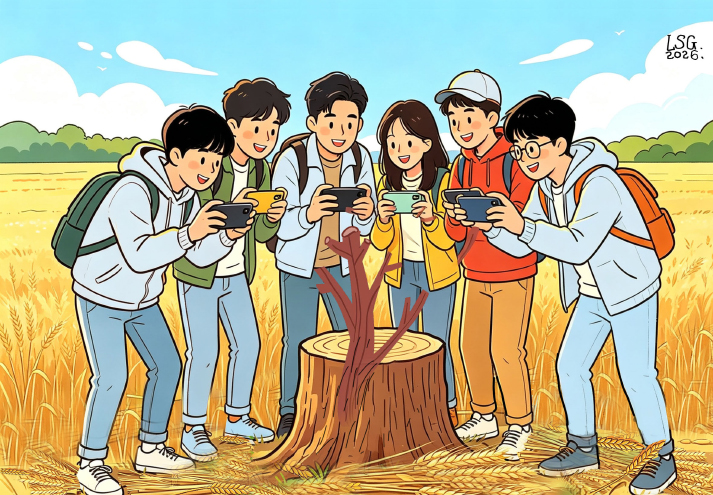 (ILLUSTRATION BY LI SHIGONG)
Earlier this year, a lone tree standing in a wheat field on the outskirts of Xi'an in Shaanxi Province gained unexpected fame after netizens dubbed it the "lonely tree" and began ascribing it the power to heal and restore vitality. As ever-larger throngs of social media users made pilgrimages to the tree, the field's owner, surnamed Liang, watched as more and more of her wheat crop was trampled. Her attempt to make the tree less picturesque by removing the majority of its branches only attracted more visitors and more damage. The case exposes a growing tension in the digital age: With content creators and platforms deriving the benefits of viral fame, who should be responsible for the costs? Jiang Cheng (Jinan Times): The story of the "lonely tree" reveals a fundamental injustice of the digital era. Benefits flow to influencers and Internet platforms, while the costs fall entirely on vulnerable people like Liang, an elderly farmer who depends on the earnings from her wheat field. This is not just unfair—it is a structural flaw in today's online engagement economy. Viral locations could be turned into paid attractions, but that is rarely feasible, as the popularity of attractions is likely to have faded before any meaningful revenue reaches locals. Blaming Liang for missing business opportunities misses the point entirely. Liang never asked to be part of this. She just wanted to protect her livelihood. The only workable solution is direct compensation from online platforms. These companies earn enormous advertising revenue from viral content. When that content causes real-world damage like trampled wheat, broken fences and disrupted lives, platforms should share a portion of that income with the affected individuals. Similar cases have occurred in other places. Viral attractions like trees, local communities or street stalls are clearly not part of standard scenic spots and some are even on private property. Yet they have been forced to become public attractions, with the profits from visits and online engagement flowing to individuals or platforms, generally at the expense of the most vulnerable stakeholders. If the engagement economy cannot benefit everyone it touches, then it has a moral debt to repay. Until platforms step up, every viral "healing" spot will remain a tragedy for the powerless. Editorial (Guangming Daily): Liang did not cut down the tree out of ignorance or anger. She did it out of desperation—because she had no other way to say "no" to visitors, which reflects a deeper crisis: There seems to be an assumption that everyone in our society wants to be seen, shared and monetized. Since the tree was cut back, visitors have continued visiting, inventing new narratives and making the mutilated tree even more famous. This demonstrate the lack of care Internet platforms show for the will of ordinary people. That is a failure of regulation on the engagement economy. A mature society respects multiple value systems. Not everyone hopes to be an influencer. Some people just want to maintain their privacy and live quiet lives. The law currently offers no clear protection against damage from viral crowds. Platforms create buzz around ordinary things without being asked to bear accountability. Local governments are caught off guard, while Liang and many ordinary people like her are left alone to fight back. To prevent similar incidents and protect privacy, there must be liability frameworks and rapid-response systems in place to rein in platforms and their users. Until then, no one is safe. Today it is a tree. Tomorrow it could be your front door. Copyedited by G.P. Wilson Comments to yanwei@cicgamericas.com |
|
||||||||||||||||||||||||||||||
|








