




Copyedited by G.P. Wilson
Comments to lixiaoyang@cicgamericas.com
| China |
| From the streets to the spotlight | |
|
|
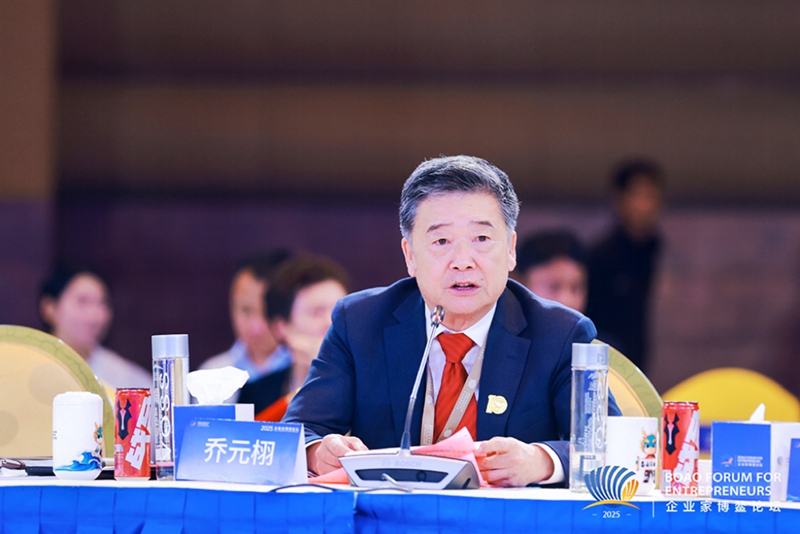 Qiao Yuanxu, founder of the Joy Billiards Group, speaks at an event of the 2025 Boao Forum for Entrepreneurs in Boao, Hainan Province. The forum was held from December 3 to 5 (COURTESY PHOTO)
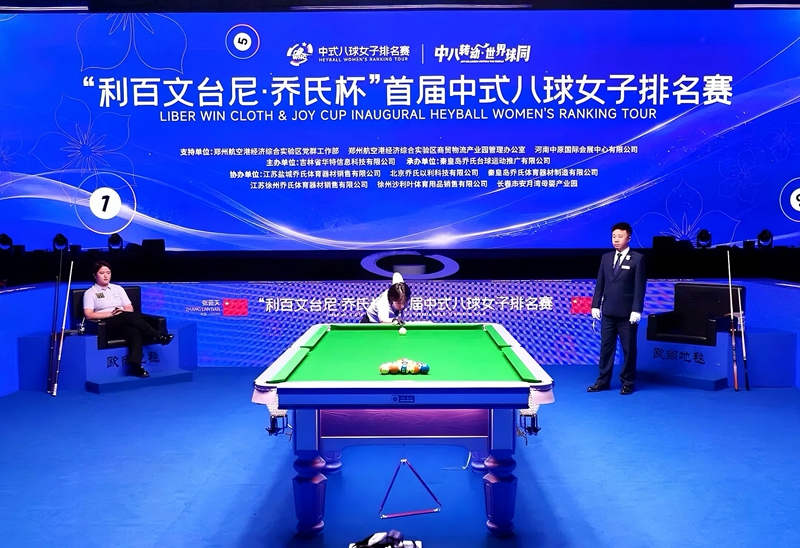
Behind the fierce competitions at the Wuhan Open snooker tournament in Wuhan, Hubei Province, on August 23-29, a quieter yet more ambitious story is taking shape—one that could propel Chinese eight-ball, also known as heyball, onto the world stage. Qiao Yuanxu, founder of the Joy Billiards Group, is pursuing an ambitious vision to introduce the sport to a broader international audience. "Snooker boasts a century of history and a well-established international system, but Chinese eight-ball emerged almost by accident. In recent years, however, it has been gaining in popularity," Qiao told Beijing Review. His company, based in Qinhuangdao, Hebei Province, manufactures billiard tables while also promoting the development and wider recognition of the emerging homegrown cue sport. Qiao said he believes the game also reflects elements of Chinese wisdom. "Shot selection is like the strategy of Go—finding harmony amid diversity. And because it requires little infrastructure, the sport can be easily introduced and played by more people," he said. From snooker to heyball Snooker is attracting growing attention in China as Chinese players continue to make their mark on the global stage. Jason Ferguson, Chairman of the World Professional Billiards and Snooker Association, said in an interview with Xinhua News Agency that snooker is growing in popularity around the world, and its growth in China is the fastest the world has seen in a decade. The deepening relationship between China and snooker is closely linked with the influence of Ding Junhui, whose breakthrough victory at the China Open 21 years ago was China's first-ever snooker ranking-event title, a milestone that has profoundly changed the trajectory of the sport ever since. In recent years, Chinese players Zhao Xintong and Wu Yize have also won world snooker championships. Unlike snooker, heyball uses 16 balls—15 object balls and a cue ball—mixing snooker's finesse with American pool's aggression. Its roots go back to the 1980s, when billiards experienced a massive surge in popularity across the Chinese mainland. Lacking official specifications, local table makers in Beijing scaled down snooker tables but kept American pool rules. The hybrid was cheap, easy to learn and soon spread among domestic players. But this grassroots origin came with stereotypes. For years, Chinese eight-ball was seen as "a game for street thugs," Qiao recalled. Snooker enjoyed aristocratic prestige; the homegrown variant remained unregulated and ">Once an engineer working in Heilongjiang Province, Qiao quit his job and went into business at 40. Starting with a small heyball club with only four tables, he became a manufacturer of billiard tables. He ran hundreds of experiments on slate flatness, rail resilience and pocket angles, securing seven patents that dramatically improved competitive consistency. In 2005, Ding's victory ignited a new billiards boom across China. Qiao's sales soared, but while there were many talented heyball players in China, there was no national heyball tournament. In 2006, Qiao saw an online ranking of Chinese heyball players posted by fans and impulsively replied, "I'll run a tournament for heyball, and I'll run at least four editions." That promise became the launchpad for professionalization of the game. Over the years, the Joy Cup professional heyball tournaments hosted by the group have grown to become international events. But more importantly, the organizers codified rules, certified referees and transformed a chaotic street game into a disciplined sport. Neil Robertson and Judd Trump are among the snooker elites who have competed in the tournaments. Heyball's tactical richness has captured the imagination of audiences far beyond China.
A heyball match in Zhengzhou, Henan Province, in July (COURTESY PHOTO) Beyond business: the Olympic push The commercial success was never Qiao's final goal. He shared similar ambition with Ferguson, which is pushing for inclusion of the cue sport in the Olympic Games. Qiao's team has lobbied for integration into the World Confederation of Billiards Sports and staged events in 75 countries. To be closer to the Olympic center, they chose the Australian city of Brisbane, host of the 2032 Summer Olympics, as their global hub. At the 2025 Chinese Eight-ball World Championship, officials from dozens of nations looked on. As Qiao recalled, one delegate marveled at how the heyball combines strategic depth with mass appeal. From a few tables on dusty sidewalks to a televised global sport, Qiao's journey has been fraught with skepticism, financial strain and persistent prejudice. Yet he never wavered. "When you carry the hopes of thousands of players on your shoulders, you cannot let go," he said. Now, with six years to go before Brisbane 2032, the 40-year legitimization campaign is in its final sprint. Qiao's team is preparing a comprehensive bid showcasing youth participation, gender equity and global reach. They have trained referees in Africa, built tables in South America and live-streamed to audiences across Europe and Asia. "From humble beginnings to the global stage, heyball's rise mirrors my own journey as a Chinese sports entrepreneur, forged in perseverance and guided by an unwavering dream," he said. BR Copyedited by G.P. Wilson Comments to lixiaoyang@cicgamericas.com |
|
||||||||||||||||||||||||||||
|





