
|
| China |
| Should children's literature cultivate competition or compassion? | |
|
|
 LI SHIGONG
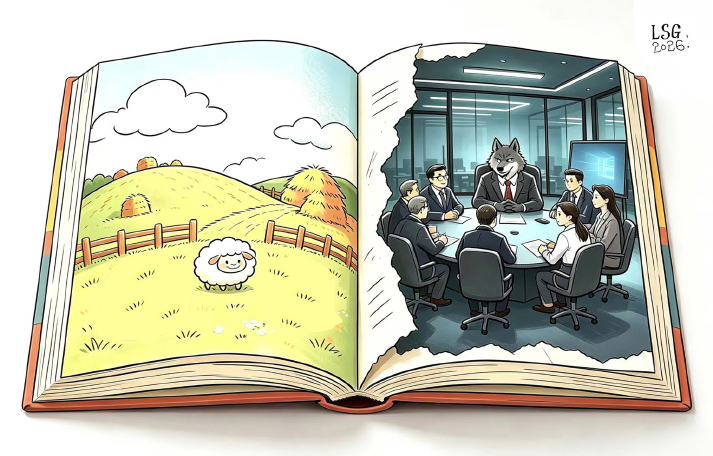
A recently released 2025 children's bestseller list has sparked controversy over the dominance of "successology" titles that promote highly competitive, and at times ruthless, ideologies. Critics argue that these books exploit parental anxiety about academic and social success and may undermine the empathy and moral grounding essential to healthy child development by replacing genuine growth with harsh mantras such as "wolf-pack culture." Parents, educators and society are asking a deeper question: How can we ensure that children are given books that are not only age-appropriate, but also truly right for their hearts and minds? Wang Meihua (Gmw.cn): Why do "pseudo-children's books" dominate bestseller lists? Two key forces drive this alarming trend. First, parental mindset. Many parents, shopping online for children's books, prioritize "usefulness"—grades, strategies and competitive edge—over intellectual nourishment. Second, algorithmic commerce. Livestreaming and short-video platforms have now become the primary go-to for buying children's books. Cheaply assembled children's books with eye-catching pitches and low prices are selling well, squeezing the market share of classic children's literature. Behind this algorithmic bubble lies a deeper erosion of children's inner worlds. Parents buy these books hoping to "arm" their kids with survivalist tactics—wolf-pack, cunning and zero-sum thinking—but ignore that childhood has its own rhythm. The greatest gift of childhood is the natural cultivation of truth and goodness, a non-quantifiable inner compass. Books centering on competition dismantle this defense. Immersed in narratives of scheming and winning at all costs, children internalize utilitarian values. Worse, once reading becomes a mere tool for advantage, the intrinsic joy of deep exploration evaporates, undermining lifelong learning. Breaking this deadlock requires more than parental vigilance. Platforms must recalibrate recommendation algorithms, giving classic literature free exposure and imposing traffic restrictions on books that glorify ruthlessness or opportunism. Publishers, too, must return to child-centered creation, prioritizing quality over quick profits. Safeguarding children's books means safeguarding childhood itself. Childhood comes but once. Let us return it to children, and let reading return to pure nourishment. Zhang Yue (Beijing Evening News): Children need books that are "just right." Only when reading materials align perfectly with a child's comprehension can the habit of reading truly take root. However, the current landscape for selecting such books is fraught with challenges. Parents, who purchase over 90 percent of children's books online, often rely on intuition or, worse, are swayed by aggressive marketing under the guise of "graded reading." This commercialized approach not only creates anxiety but also prioritizes "usefulness" over genuine engagement. Consequently, bestseller lists are frequently dominated by utilitarian and success-oriented literature, steering children toward instrumental reading that stifles their innate curiosity and long-term cognitive development. The solution lies in collaboration. Publishers must move beyond marketing fluff and establish unified, scientifically backed grading standards. More importantly, parents and teachers need to act as active listeners, engaging in conversations to uncover their children's unique interests. Encouragingly, a growing number of institutions are pioneering practical solutions through training courses and personalized consulting. Ultimately, the question of "what a child reads" is a question of "who a child will become." The path forward demands that teachers and parents step into the children's world and listen to their voices, to ensure the next generation reads not just for grades, but for life. BR Copyedited by Elsbeth van Paridon Comments to yanwei@cicgamericas.com |
|
||||||||||||||||||||||||||||||
|