|
| World |
| Toward Integration | |
| The Black Expo African open market in a Beijing hutong brings foreigners and locals closer | |
|
|
|
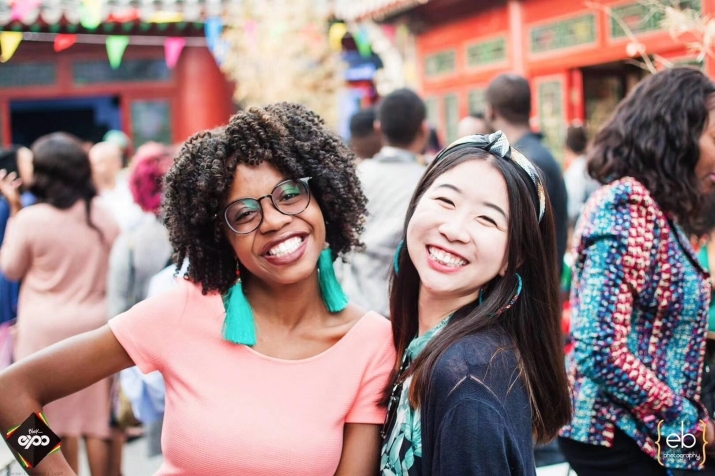
Visitors at Black Expo in Beijing From New York to Indianapolis, Texas to New Mexico, the Black Expo phenomenon gathers hundreds of thousands of people in the U.S. annually with the aim of promoting black culture through food, sport events, fashion exhibitions and comedy shows. And now, the first Black Expo was held in Beijing on March 31. An entrepreneur from Washington D.C., organizer Olivia Nadine wanted to offer a platform for small African businesses in Beijing to feature their products to an appreciative Chinese audience. Joined by James Sserwadda, a Ugandan artist, and Hannah Getachew, an Ethiopian female empowerment advocator, Black Expo grew with the aim of “further shaping the black narrative” in China. “We wanted to have an inviting environment that shows off black culture and how diverse it is because we are not a monolith. We are a diaspora,” said Nadine. It took the team six months to prepare the environment at Courtyard No 27, an art and culture space in a renovated hutong courtyard located in the center of Beijing. One of the first people to share Nadine’s enthusiasm was Yu Ge, manager of the Courtyard No 27. “We’d organized an event showcasing Africa last year, but Black Expo has attracted a bigger participation from many different African countries. I think Chinese people enjoy African artworks, as well as African music and dance,” he explained. This was evident on the day of the well-attended Expo by the way Chinese visitors accepted the Jindafit challenge by Salsa Caribe DJ and professional fitness instructor D'Jack Tchinda. However, only the bravest souls could complete his one-hour full-body dance workout based on African moves and rhythms. The foodies also came out in their numbers enjoying everything from cupcakes to hummus-based specialties. One of the biggest attractions was the colorful display of African cosmetics and fashion. Jimena Ortega, promoting a clothing range from Cape Verde, said the many outfits on display epitomized the message of Black Expo. “A lot of the girls represented their countries through their clothes today. Although many people see Africa as one place, now they can really see the diversity [of the continent] from the clothing,” she said. Visitor Shen Kaiqi, a PhD candidate in sociology from Minzu University of China, said the Black Expo was an interesting case of social integration in Beijing. “As the Belt and Road Initiative brings more and more foreigners to Beijing, they have a stronger need to feel a sense of belonging. Black Expo serves this purpose primarily, although it also enables Chinese people to witness and experience African culture and to explore ways to communicate with foreigners. But integration [still] remains a very slow process,” she said. |
|
||||||||||||||||||||||||||||||
|