
|
| Xinjiang Today |
| Songs across the frontier | |
|
|
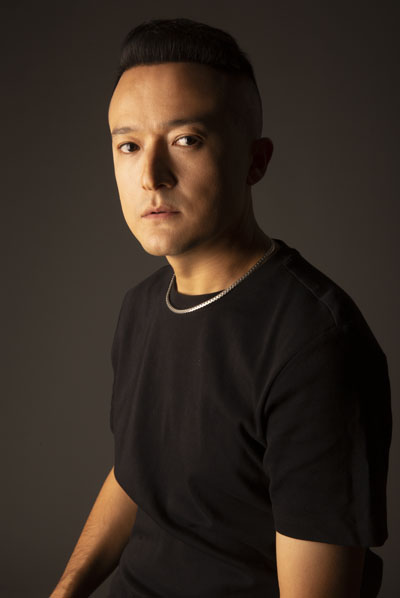 Tuhongjiang (COURTESY PHOTO)
Tuhongjiang's story My name is Tuhongjiang, and I now live in Urumqi. I was born on the outskirts of Kuerle (Korla), a city in central Xinjiang. Influenced by my older brother, I first encountered rock music through cassette tapes as a child, and that was when the seed of music was planted in my heart. Encouraged by him, I began teaching myself the drums at the age of 9, and by 11, I had already become the drummer for a band in a factory compound. In high school, I started learning guitar and singing on my own. In 2003, I went to Urumqi for university. During my four years there, I formed several bands and frequently performed at campus events. After graduating in June 2007, I quickly found a job singing at a bar. A year later, my song Urumqi in January brought me onto the stage of the first New Songs Singing Xinjiang competition, which marked the beginning of my singing career. I have stayed on that path ever since. In 2012, the talent show The Voice of China became a nationwide phenomenon. Watching those outstanding singers on television, I became deeply inspired and imagined myself one day standing on that same stage. In 2014, the show's production team came to Urumqi to hold auditions. Among countless contestants, I advanced through multiple rounds and eventually earned a coveted chair turn from mentor Na Ying, one of China's most influential pop singers, on the program. Since the mentors initially sat with their backs to the stage, they judged solely on vocal talent and tone, ignoring appearance or stage presence. Therefore, a chair turn symbolized pure vocal recognition and served as a pass to advance in the competition. Once the episode aired, many more people began to know me. However, that recognition brought with it a difficult dilemma: Should I stay in megacities such as Beijing or Shanghai, or should I return to Xinjiang and continue my career as a local singer? The question echoed relentlessly in my mind. After careful consideration, I made my decision: I returned to Xinjiang. 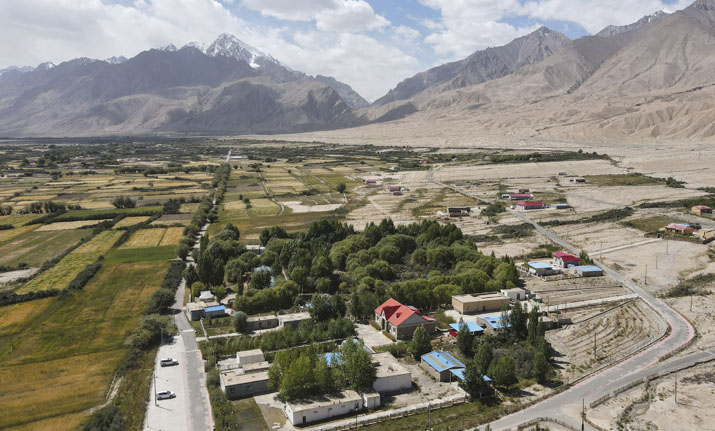 The house of Bayika Kalidibek, who was awarded with the national honorary title of People's Guard in September 2024, in Tashikuergan (Taxkorgan) Tajik Autonomous County on September 4, 2023. The county borders Tajikistan, Afghanistan and Pakistan. Patrolling the border has been a tradition for many locals (XINHUA)
Back in Xinjiang, everything felt natural and familiar again. I devoted myself fully to music while remaining close to my parents and family, which gave me a deep sense of stability. I tied the knot in Urumqi in 2015, and just a year later, I became a proud father to a beautiful baby girl. Living an ordinary life while pursuing the career I love has filled my days with both fulfillment and happiness. Along my musical journey, I have encountered many people who have helped and inspired me. One of them is Chen Ruijun. I like to call him Brother Ruijun because he is the kind of person who always takes care of those around him with warmth and attentiveness. I first met Brother Ruijun in Beijing in September 2014. Introduced by my musical mentor Rui Wenbin, I got to know him at the launch event for the Voices of Assistance-Xinjiang album. As an official sent to Xinjiang as part of the paired assistance program—a national initiative launched in 1997 to provide financial, technological and personnel support for the region's development—Chen wrote many lyrics inspired by the region during his years working there. I was fortunate enough to perform one of his songs, titled Red Flower Valley. What a beautiful name it is. Just hearing it evokes images of endless flowers blooming across green grasslands beneath drifting white clouds. But behind the lyrics lies a moving story. Red Flower Valley is dedicated to the brave border guards. Every spring, wild almond, peonies and countless other flowers bloom across the Barluk Mountains in Tacheng Prefecture in northwest Xinjiang for months at a time. Inspired by the sea of flowers, the name Red Flower Valley came to Brother Ruijun naturally. To him, those flowers symbolize generations of ordinary yet devoted border guards who have taken root in the frontier and steadfastly defend the motherland. In 2018, with Brother Ruijun's support, I traveled with a filming crew to Tacheng to search for the landscapes described in the lyrics and shoot the music video for Red Flower Valley. During that trip, we were also fortunate enough to visit Wei Deyou, whose story has moved countless people across China. Since 1964, Wei has guarded a remote uninhabited stretch of China's border with Kazakhstan. He established his home right on the frontier and has dedicated more than 50 years to patrolling the borderlands, covering over 200,000 km in total, equivalent to circling Earth's equator five times. He becomes known nationwide as a "walking boundary marker." One lyric from Red Flower Valley reads: Leaning long against your broad embrace, as horses gallop freely along the border line. Generation after generation cultivated and defended the frontier, heroic flowers and heroic spirits bloom across the hills. For the sake of national security, generations of border guards have endured immense hardship to build and defend the frontier. Since then, Brother Ruijun and I have remained in close contact. Every gathering with him leaves me inspired. Our most recent reunion was in September 2024 at the inaugural Voices of Assistance-Xinjiang Golden Autumn Concert, held at the Xinjiang Cultural Center in Urumqi. Ten years after we first met, he remained as energetic and warm-hearted as ever. His laughter filled the room, and everyone around him seemed energized by his optimism. A journey of assisting Xinjiang becomes a lifelong bond with the region. Brother Ruijun's connection with this land continues to this day. My friends in Xinjiang and I often think of this passionate and talented man. There is still so much I can learn from him throughout my life. 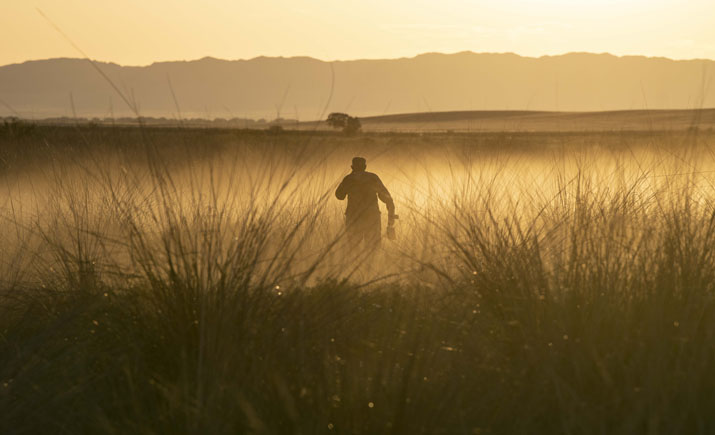 Wei Deyou, who has patrolled a remote uninhabited stretch of China's border with Kazakhstan for more than 50 years, herds livestock while conducting border patrols on the Salbulak Grassland on June 8, 2021 (XINHUA)
Chen Ruijun's recollection It was through my service in Xinjiang as part of the national paired assistance program that I forged a profound bond with the region. Over the years, I have frequently organized and participated in activities involving participants of the program, while also beginning to write lyrics inspired by the land. Meanwhile, I came to know many musicians from both Xinjiang and eastern regions of the country. I met quite a few talented singers. Most, however, mainly performed covers, and many did not even have a single original song to their name. It was extremely rare to find someone who could not only sing well but also write and compose their own music. Tuhongjiang was one of those rare singer-songwriters, and that immediately made me view him in a different light. His award-winning original song Urumqi in January in 2008 marked his official entry into the music scene. Coincidentally, that was also the year I began my service in Xinjiang as part of the paired assistance program. I noticed this young musician back then and sensed a bright, cultured and sincere spirit in him. That was how our connection first began. The first time Tuhongjiang and I talked face to face was after my assistance mission in Xinjiang concluded. At the launch event for the Voices of Assistance-Xinjiang album in September 2014, Tuhongjiang was invited by our mutual friend Rui Wenbin to perform one of the featured songs. I was serving as the host of the event, and we later shared a table at dinner, which naturally gave us more opportunities to talk. Tuhongjiang struck me as sunny, warm-hearted and courteous, with a hint of shyness. I immediately took a real liking to him, and we agreed that we should find opportunities to collaborate in the future, and we stayed in close contact for many years. Not long afterward, at the invitation of my friend Gai Li, I spent the Spring Festival holiday in Tacheng, visiting a remote border regiment for field research. During that trip, I wrote the song Red Flower Valley for a local tourism project they planned to develop there. While writing the lyrics, I sought advice from respected musicians Hou Dejian and Chyi Chin, both of whom offered invaluable insights. For the music, I turned to composer A Jian, who had previously crafted my signature song Dreaming Back to Hetian. I invited him to score the melody for Red Flower Valley and suggested that Tuhongjiang be the one to perform it. A Jian's composition and Tuhongjiang's vocal interpretation complemented each other perfectly—graceful, emotional and deeply moving. The song received widespread praise from audiences and music professionals alike. In a beautiful spring season, Tuhongjiang performed it live at the Red Flower Valley scenic area, where the response was extraordinary. Since then, the song has become widely recognized not only within the scenic area and Tacheng, but also across Xinjiang and even throughout China. As for the story between Tuhongjiang and me, it has only just begun. The best chapters, I believe, are still ahead—and worth looking forward to. Comments to yanwei@cicgamericas.com |
|
||||||||||||||||||||||||||||
|