
|
| China |
| Does the order of names in the credits matter? | |
|
|
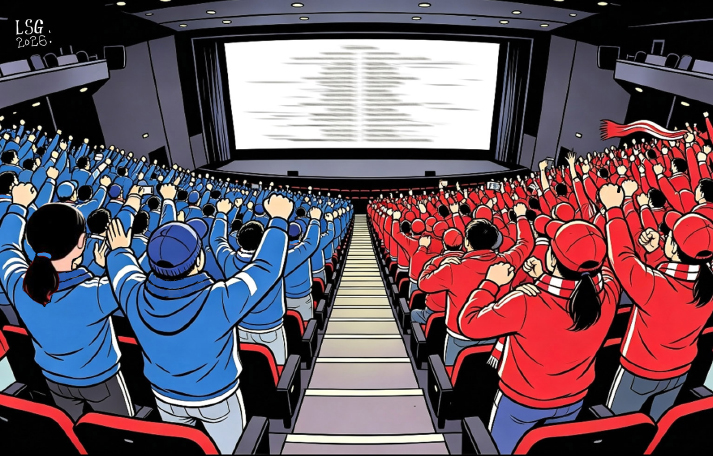 (CARTOON BY LI SHIGONG)
In late June, digital multimedia conglomerate Tencent unveiled its program lineup and cast roster for the coming season. Notably, all actors appearing at the event were listed under their legal names with their stage names in parentheses, and their names were ordered according to the number of strokes in their surname, a traditional Chinese sorting method with a similar function to alphabetization. The Tencent method of listing the actors was in line with new rules jointly issued on June 12 by three industry associations, including the China Television Drama Production Industry Association, mandating standardized management of actor credits. Much of the public attention has focused on the replacement of stage names with legal names, but what deserves deeper reflection is not which names are used and how they're written, but why a regulation concerning actor credits has become a significant issue in industry governance. Gao Wei (Nanfang Daily): The new mandate on actor credits directly targets a notorious industry ailment: fierce fighting over billing order. Originally a neutral indicator of participation, credits had been twisted into a frontline for competition for status. A higher position indicated greater star-power and exposure, not necessarily more screen time. This toxicity cascaded into fandom culture, fueling endless campaigns by fans to compare stars based on their order in credits. Disputes among fan communities have frequently broken out. The absurdities are legion: inflated titles like "special recommendation" or "special guest star" to make sure everyone is appeased, and fans obsessing over millimetric differences in promotional materials even after official disclaimers of "in no particular order." Insiders confess that arranging credits has become a hair-pulling nightmare. When a show gains notoriety for credit wars, it repels audiences. When actors invest energy in jostling for position rather than honing their craft, quality suffers. When actors rise to prominence because of hype and online buzz rather than acting ability, young viewers are misled. This rule is not a panacea, but it is a vital first step. It compresses space for petty infighting and nudges the industry back toward creative priorities. After all, whether lead or supporting, the only "star" that endures is the one audiences remember for their performance, not their place on a poster. Lin Zilu (Jiefang Daily): A name in the entertainment industry is not just a name, but branding. A name's position in the credits moves capital and fandoms alike, long before a single frame is shot. This obsession has shifted the industry's compass. Quantifiable data such as the number of high-profile stars, social media heat and fundraising appeal often outweigh character depth and critical reception. Investors chase online buzz to de-risk projects; actors leverage credit order to inflate their market worth; fans weaponize data to validate those orders. Together, they have built an unspoken rulebook that prizes metrics over craft. But storytelling should not be a business of creating online buzz. Audiences ultimately remember authentic emotions and credible characters, not credit order. Recent hits such as The Long Season and To Grandma thrived on narrative substance, not star power, proving that the market never abandoned content; the industry merely misread it. Regulating credits is therefore not about formatting. It is a long-overdue correction of a chronic misjudgment, confusing online buzz with artistic value and high viewership with creativity. By downplaying credit order, we can begin to restore respect for the one true arbiter of success: the audience's lasting emotional connection to a story well told. Copyedited by G.P. Wilson Comments to yanwei@cicgamericas.com |
|
||||||||||||||||||||||||||||
|