
|
| Xinjiang Today |
| Both past and present | |
|
|
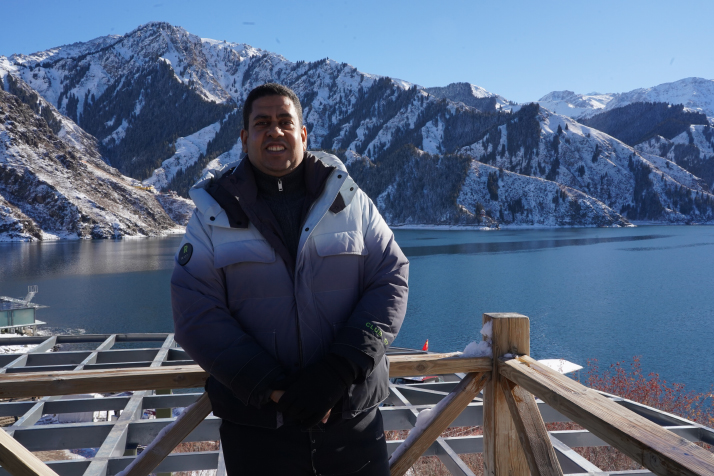 Moataz Abdellah Mohamed Abdallah at the Tianchi Lake in Changji Hui Autonomous Prefecture on November 8, 2025 (WANG YAJUAN)
I received an invitation from the China International Communications Group to visit Xinjiang Uygur Autonomous Region. When I informed my supervisor—Professor Ma Shuang from the School of International Communication at Jilin International Studies University—I immediately felt her strong encouragement even before she began guiding me through the necessary procedures. I am deeply grateful to her for both. I also thank her for her support and assistance in handling all the required formalities. 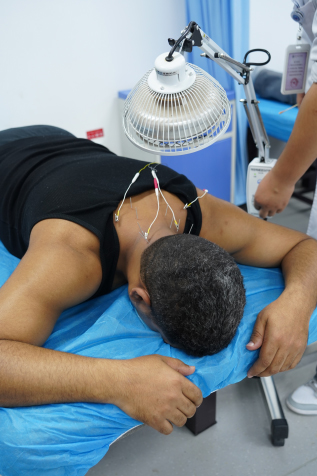 Moataz Abdellah Mohamed Abdallah receives acupuncture at the Kashi Prefectural Hospital of Traditional Chinese Medicine on November 4, 2025 (WANG YAJUAN)
An old city revived After more than six hours of travel, we arrived in Kashi (Kashgar). From the very first moment, I was struck by the extraordinary level of organization, reflecting the profound heritage and long history of Chinese civilization. A highly professional team accompanied us throughout the visit. Our journey began in the Ancient City of Kashi. I found myself reflecting on how this urban renewal project had revived the architectural soul of the ancient city and how it transformed the lives of residents from hardship to prosperity. An artistic performance staged at the city gate early that morning vividly brought Kashi's history to life. It was truly magnificent. I still remember a woman who runs a family guesthouse. With government support, she and her father had renovated their old home into a homestay. She spoke with pride about how their business now thrives year-round. Today, she works alongside her family to welcome guests, while their traditional home has been upgraded with modern facilities. Living within a stable and supportive system, she said, has brought both opportunity and security. This old city, predominantly inhabited by Uygur people, stands as a testament to the unity of the Chinese nation across its vast territory. This impression was further strengthened during our visit to the Id Kah Mosque. The imam spoke about the freedom to carry out religious activities, and the mosque's historic architecture—witness to centuries of change—offers a powerful sense of continuity. We visited the Kashi Prefectural Hospital of Traditional Chinese Medicine, where we met doctors from across China, working together with local medical teams to serve people of different ethnic groups. We exchanged professional insights and experienced treatments such as acupuncture and cupping firsthand. That evening, we dined at a well-known local restaurant. Kashi cuisine shares similarities with Arabic dishes while incorporating distinct Chinese elements. These flavors felt both familiar and new, evoking the enduring spirit of the ancient Silk Road through the aroma of spices. The following day, we visited the Central Asia operations center of Bossgoo, a leading cross-border e-commerce company, where we learned about the region's growing trade potential. Later, in Shufu County, we explored the Xinjiang Ethnic Musical Instrument Village. After enjoying a rich performance of traditional music, I noticed that many instruments share the same names in Uygur as they do in Arabic. For example, the instrument we call rabab is known by the same name in both languages. This made me reflect: Did we influence the Silk Road, or did it shape us—or did we together create this shared cultural heritage? Even the word "tea," widely used across cultures, originates from the Chinese cha. 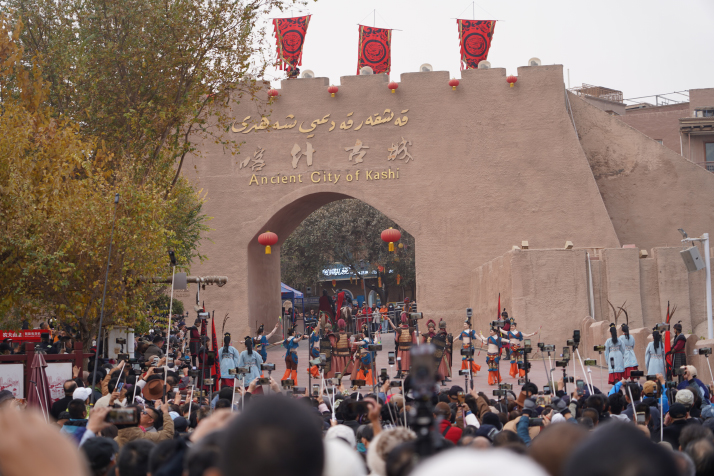 The Ancient City of Kashi on November 4, 2025 (WANG YAJUAN)
Shared experiences In Urumqi, we visited several industrial sites, including pharmaceutical factories, before heading to the Xinjiang Museum. Among its many exhibits, I was particularly struck by the desert mummies—reminiscent of those in Egypt—and the brocade armband inscribed with the line "Five stars rising in the east is an auspicious sign for China," an archaeological treasure that stands as clear evidence of the long-standing governance of this region by ancient Chinese dynasties. The entire museum was extraordinary—an incredibly rich and rewarding experience. We also visited the Islamic Institute, where we observed the religious education provided to Uygur students and listened to their recitation of the Quran. We expressed our respect and appreciation for this rigorous religious education institution. At the Xinjiang Exhibition Hall on Combating Terrorism and Extremism, we were reminded of the importance of distinguishing between faith and extremism. True religion promotes peace and development, while extremism distorts belief and leads to harm. Next, at the Xinjiang International Grand Bazaar, we could hardly resist buying spices, dried fruits and nuts. The market reminded me of the famous Khan el-Khalili in Cairo. Dinner at a restaurant called Afanti brought back memories of Juha (Nasreddin Hodja), which many of us grew up with. The cultural connections shaped by the Silk Road—from these stories to shared traditions—remain alive today. 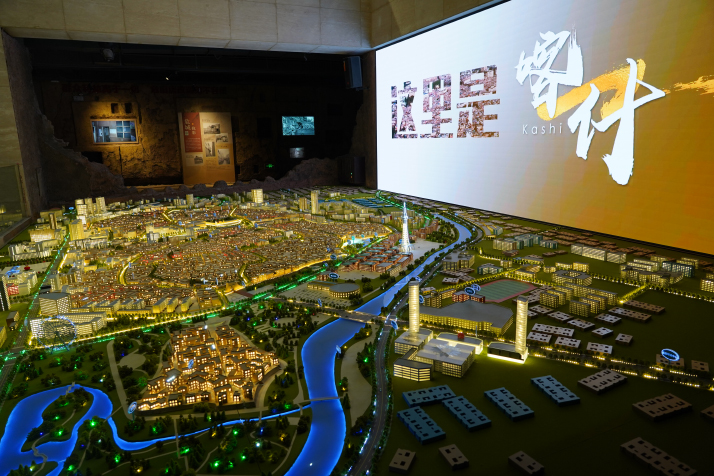 A 3D model in a museum showcasing the renovation of the Ancient City of Kashi on November 4, 2025 (WANG YAJUAN)
We also visited Changji Hui Autonomous Prefecture and then the Tianchi Lake in the Tianshan Mountains. "Paradise on Earth" feels like the only fitting description. It had snowed the day, and for the first time in my life, I was able to see and touch snow. Its purity reminded me of the hearts of the people of Xinjiang. In the evening, we watched a performance titled A Thousand Tales of the Western Regions. Rich, vibrant and beautifully choreographed, it brought together artists from across China. The performance evoked the magical world of One Thousand and One Nights, and I felt it would resonate deeply with audiences in the Arab world. Before leaving, we bought souvenirs for ourselves and our loved ones. Not merely as mementos, but as reminders of an experience that will remain vivid in our minds. Xinjiang is both past and present. It shines brightly, like a star in the Eastern sky. My sincere thanks to everyone who organized this unforgettable journey. These memories will stay with us, and we will share them with our families, students and everyone we speak to. The author is an Egyptian faculty member at the School of International Communication, Jilin International Studies University Comments to wangyajuan@cicgamericas.com |
|
||||||||||||||||||||||||||||
|








