|
| Xinjiang Today |
| How much fruit can you buy in Aksu with 100 yuan? | |
|
|
|
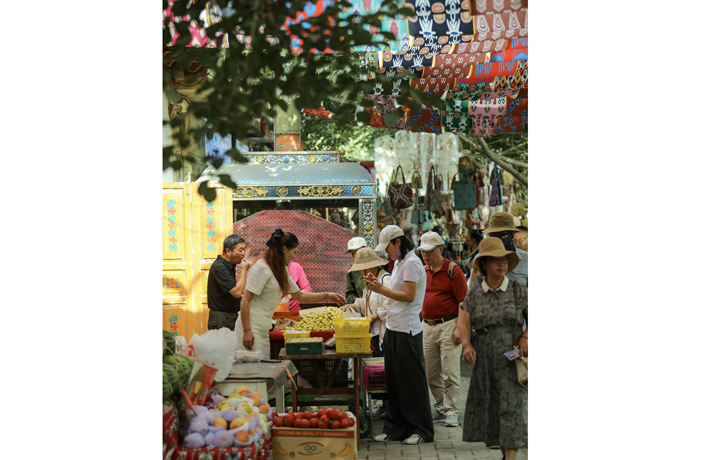
Vendors and shoppers in the Apple Square Morning Market in Aksu City, Aksu Prefecture, on June 11 (VCG) At the first light of dawn, the Apple Square Morning Market in Aksu City, Aksu Prefecture, a favorite of locals, is already bustling. Baskets of fruit are neatly stacked along the tree-lined path by the river. Most of the vendors are farmers from surrounding areas, calling out to passersby in diverse accents. The air is filled with the sweet fragrance of melons and other fruits mixed with the warmth of freshly cooked breakfast. Morning markets In Xinjiang, morning markets usually begin at dawn and finish around noon. Their charm lies in connecting shoppers directly to producers, giving consumers access to fresh produce and handmade products and allowing producers to receive retail prices for their goods. The markets also perform a social function as daily gathering points for their communities. Why is the fruit so sweet? Aksu Prefecture is located in an area known as Xinjiang's golden fruit belt at 41 degrees north latitude, with more than 2,800 hours of sunshine a year. The abundant sunlight allows trees and plants to produce more sugars and the 15-20-degree Celsius difference between day and night temperatures means plants consume less and store more of the sugar they produce. In addition, plentiful water from snowmelt in the Tianshan Mountains and well-aerated sandy soil give fruit trees a longer growing period, allowing growers to harvest their fruit after Frost's Descent, or Shuangjiang, one of the 24 solar terms of the traditional Chinese calendar. Waiting to harvest until after the frost arrives produces fruit that is in high demand around China for its natural sweetness. Why is it so cheap? Not only does the morning market cut out the many steps between producers and consumers, it also allows prices to closely reflect local supply. In a fruit-producing region, the abundance of local fruit keeps prices low throughout the growing season. How much can you buy with 100 yuan ($15)? In big cities around China, 100 yuan is about what it would cost to buy 5 kg of non-premium Xinjiang grapes, apples or pears during peak season. When Xinjiang Today visited the morning market in Aksu Prefecture, apricots were 10 yuan ($1.5) per kg, flat peaches were 12 yuan ($1.8) per kg, dragon fruit was 10 yuan for six, Hami melons were 1.5 yuan ($0.22) per kg, watermelons were 5 yuan ($0.75) for two, apples were 8 yuan ($1.2) per kg and tomatoes were 5 yuan for 3 kg—they won't sell smaller quantities! With 100 yuan enough to buy 10 kg of apricots, 60 kg of tomatoes or 40 watermelons, it was soon clear 100 yuan would buy too much fruit to carry. Comments to shangzhouhao@cicgamericas.com |
|
||||||||||||||||||||||||||||
|