
|
| Xinjiang Today |
| Lighting the way with words | |
|
|
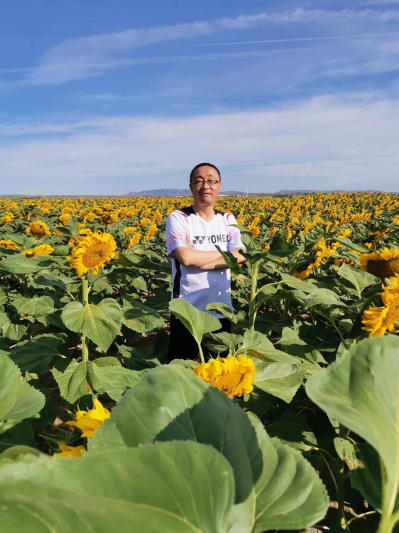 Li Wenhai (COURTESY PHOTO)
Li Wenhai's story My family comes from Tianshui in Gansu Province, a region crisscrossed by rivers, loess landforms and mountains and a land that planted the first seeds of my literary soul. As my hometown was poor, my parents moved us to Xinjiang when I was young. The wind, sand and lakes of this vast region left a deep impression on me. It became my second home—a place that holds my memories and emotions close. I've always loved writing. In truth, that love began with my mother. When I was little, she would recite poems in her spare time. Her voice felt like music, and it sparked something in me. I wanted to tell the stories in my head, to put them down on paper. That feeling never left me. In college, I chose to major in Chinese literature, dreaming of becoming a writer, someone who could capture the world and its emotions with a pen. 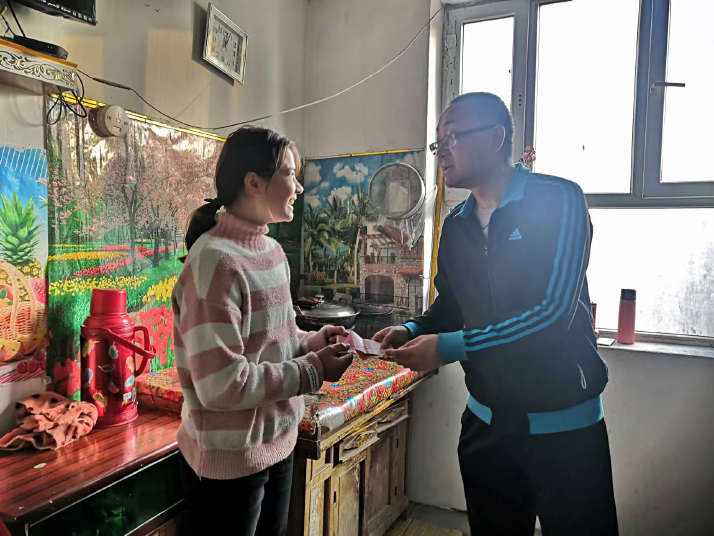 Li Wenhai presents financial aid to a university student from a struggling family (COURTESY PHOTO)
After graduating from Xinjiang University in 1994, I joined the China State Construction Engineering Corp. (CSCEC) Xinjiang Construction and Engineering (Group) Co. Ltd., beginning a career in business management. Over the years, I grew from a nervous newcomer to a steady manager, watching new buildings rise up across Xinjiang. I grew professionally, but life got busy. The daily grind took up most of my time, and that bright literary dream of mine—though still alive—began to fade, like a treasure covered in dust. Only late at night would I pick up my pen and write a few essays about life. They were published now and then in local newspapers, and each time I saw my name in print, I felt a quiet sense of pride. Then, in the summer of 2018, everything changed. I attended a training session at China Academy of Discipline Inspection and Supervision in Beidaihe, Hebei Province. As a member of an ethnic minority group, surrounded by over 100 strangers, I felt somewhat out of place. At the cafeteria, I often noticed a man named Chen Ruijun. He was tall, with a calm and humorous way of speaking that naturally drew people in. We did not speak until the very last dinner of the training, when I gathered the courage to introduce myself. At the time, I only knew that he was an executive at China State Decoration, another subsidiary of CSCEC. I had no idea that this seemingly ordinary man would later become a major influence in my life as a writer. 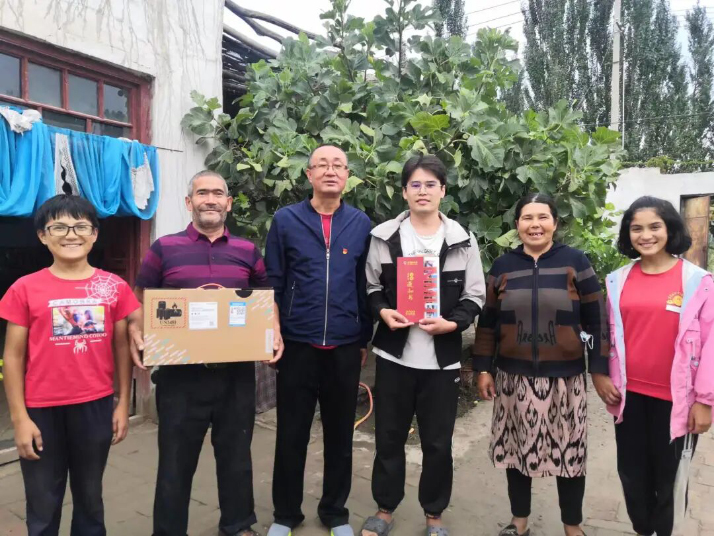 Li Wenhai visits students and offers support during his time working in a village in south Xinjiang (COURTESY PHOTO)
When the COVID-19 pandemic struck in 2020, and everyone around me was racing to build the Huoshenshan and Leishenshan hospitals in Wuhan, Chen stepped up in a big way. He wrote one powerful piece after another on touching stories of people fighting the virus. Reading them, I was filled with admiration. Later, I learned that after working in Xinjiang in 2009, he developed a deep affection for the region, writing books and songs about it. When I told him how much I loved his song Hetian (Hotan), he just smiled and said he hoped more people would come to know the real Hetian Prefecture. His love for Xinjiang only deepened my respect for him. One summer, we met again at the training session in Beidaihe. I was going through a difficult period at work and feeling discouraged. Chen noticed and took me aside after class for a walk by the sea. He asked me if I knew Chairman Mao Zedong's poem Beidaihe, to the Melody of Langtaosha (Ripples Sifting Sand). As a Chinese literature major, I was ashamed to say I didn't know a single line. Yet Chen, who studied engineering, recited the whole thing from memory with passion. His sincerity and energy, along with a line from a Tang Dynasty poem he often cited "Beside a sunken ship, a thousand sails pass by; in front of a sick tree, ten thousand woods greet the spring," cleared my mind like a sea breeze. From that day on, he became my guiding light. In 2021, when I considered joining the village residency program, which send cadres to live and work in villages, in south Xinjiang, I immediately sought his advice. He told me to be a man with love for his country. His words gave me the push I needed. During my time in the village, I began writing again—little poems and essays about what I saw and felt. Chen continued to check in on me. When he found out I was writing regularly, he was delighted. He helped me share my works online, where they received millions of views and likes. Whenever I grew too busy to write, he would remind me, "Don't slack off. Keep writing." His encouragement kept me going. Today, Chen is more than just a mentor or a friend. He is my guide. His warmth, his humor and his steady presence have shaped me deeply. He's shown me by example how to live with purpose. Because of him, I've grown. Going forward, I'll continue along the path of writing. I hope to work alongside him, to learn more about the craft, to share our thoughts on life, to dig deeper into Xinjiang's culture, and to bring its art and stories to more people. Meeting Chen was the best thing that ever happened to me. I will always treasure this friendship and this mentorship. With him by my side, my life has become richer and warmer. I'll use my pen like a pair of wings—to carry love and hope, and to find meaning in both literature and life. 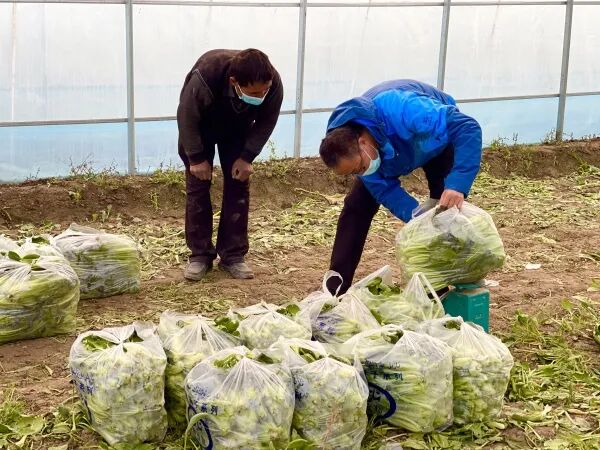 Li Wenhai helps villagers sell greenhouse vegetables during residency in south Xinjiang (COURTESY PHOTO)
Chen Ruijun's words Wenhai and I are colleagues at CSCEC. Because we work in the same field, we became acquainted several years ago. CSCEC places great emphasis on professional training, and during two training sessions at Beidaihe, we spent considerable time together. I found that he loved literature, and he was somewhat shy and reserved, yet thoughtful. I came to understand him on a deeper level under very unusual circumstances. At that time, he was struggling at work and feeling low. His strengths are his integrity and commitment to his principles. His weaknesses lie in a lack of ease in social situations and difficulty navigating complicated interpersonal relationships. This made him vulnerable to being misunderstood and placed in a difficult position. I encouraged him in my own way—not to lose heart, not to give up his literary aspirations, and to keep moving forward. Later, he asked for my advice about joining the village residency program. I encouraged him to seize the opportunity, change his environment, gain a deeper understanding of Xinjiang, immerse himself in life, keep creating and continue pursuing his literary dream. Li's literary dream continues. Despite a top graduate from Xinjiang University's Chinese literature department, he works at a construction company. Once his passion for writing was rekindled, his achievements have been remarkable. After seeing this, I can't help but feel a tremendous sense of achievement. Comments to yanwei@cicgamericas.com |
|
||||||||||||||||||||||||||||
|