
|
| Xinjiang Today |
| Experiencing Xinjiang through food, festivals and friendship | |
|
|
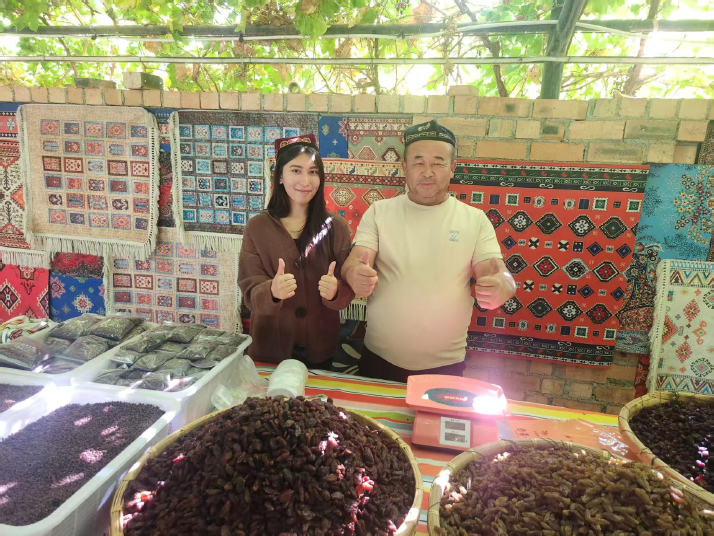 Vanchyngyz (left) poses with a vendor in Urumqi (COURTESY PHOTO)
Deciding to make the leap of faith and come to study in Xinjiang has been far more than an academic journey. For me, it has provided an opportunity to dive headfirst into the region's rich and multifaceted culture.
The experience that cemented my initiation into the culture here was an unforgettable festival experience: Roza Festival, also known as Eid al-Fitr. The festival takes place on the first day of the 10th month of the Islamic calendar and marks the end of Ramadan, following a month-long period of fasting from dawn to dusk. On the morning of March 21, the day Roza Festival fell this year, I wandered through the streets of Urumqi, ready to soak in the festive atmosphere. The city seemed subtly transformed. People had donned their finest ethnic attire, their faces bright with joy. The air carried a sense of warmth and solemnity. Some carried fruit and pastries as they made their way to visit relatives and friends, while children in new clothes played in the streets, laughing as they ran through the crowds. The scene was lively, but could not quite be described as chaotic; there was a familiarity and orderliness to everything. This left me feeling both curious and deeply touched. As the festival kicked into gear, I met a Uygur man who warmly invited me into his home. There, for the first time, I felt truly drawn into the life of a local family. We sat together around the table, sharing pilaf, roast meat and hand-grabbed lamb. They kept placing food on my plate and asking whether I was used to the flavors. It was these small gestures that made me feel truly at home. 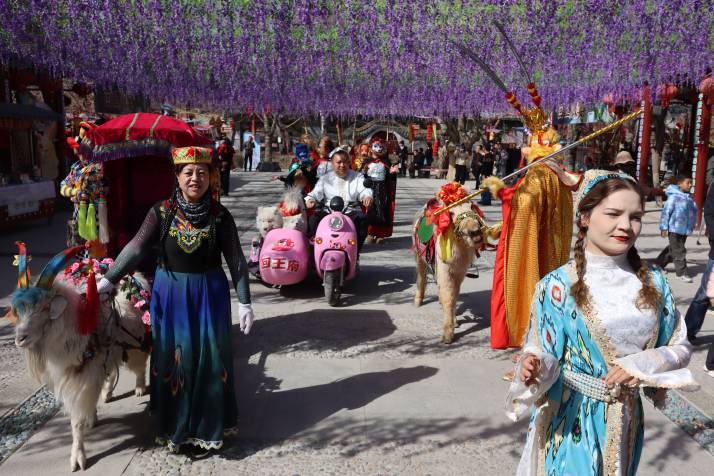 A parade in celebration of the Roza Festival in Hami City on March 21 (VCG)
This experience also led me, quite naturally, to compare how the festival is observed in Xinjiang and in my own country, Kyrgyzstan. In both regions, Roza Festival is an important religious holiday, during which people put on new clothes, visit relatives and friends, and exchange blessings. Yet there are also differences. In Xinjiang, the celebration seems to be more vibrant and communal, with people gathering in public squares for dances and ethnic performances. In Kyrgyzstan, celebrations are more family-centered, and the activities tend to be more private and traditional. By holding this kind of comparison in my mind, and using my own experiences to my advantage, I was able to gain a comprehension of Xinjiang's culture and improve my understanding of my own country's traditions. I came to realize that cultures are marked by both differences and common ground, and it is precisely this mix of contrast and connection that makes the world so rich and wonderful. If Roza Festival offered an entry point into Xinjiang's culture, daily life took me on a slower journey toward understanding it more deeply. At Xinjiang Normal University, many of my classmates come from China's ethnic minority groups, including Uygur and Kazak students. At first, their ways of life were largely unfamiliar to me. But over time, I began to discover many fascinating aspects of the local culture. An intriguing feature is the culture of sharing meals. At lunch, my classmates would often share food from the same plate rather than keep to their own portions. This stands in clear contrast to the custom in my own country, where people are more accustomed to eating from individual plates. Festival traditions also differ from one ethnic group to another, with each community preserving its own rituals. At first, these differences seemed peculiar, and it took time to adjust. Gradually, however, I learned to understand that they all have their unique appeal and developed a fondness for them. 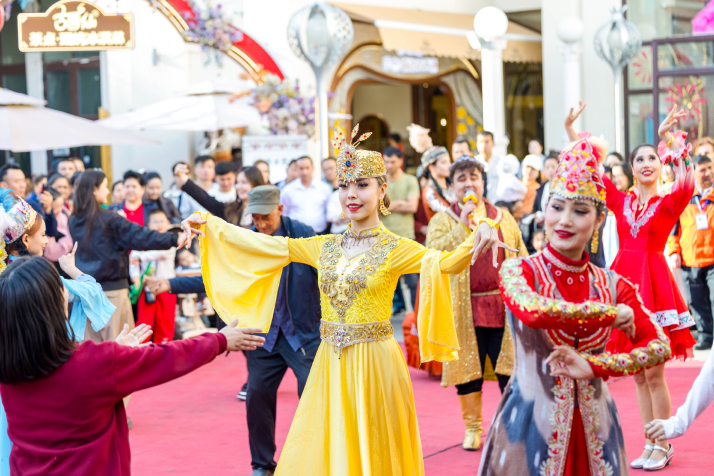 People dance at the International Grand Bazaar in Urumqi on April 4 (VCG)
While differences are all-pervasive, we have much in common: a strong attachment to family, sincerity toward friends and a shared determination to work hard for the future. These shared values helped us build friendships very quickly. On one occasion, a Uygur classmate invited me to visit his dormitory. He had prepared some simple food and tea for me. Although it was not a formal or festive occasion, he still received me with great hospitality. As we talked, he explained that in his culture, a host should always do everything possible to make a guest feel comfortable and welcome, no matter how simple the setting may be. What touched me most was that when I was about to leave, he insisted on walking me downstairs and kept saying, "Come again often." In that moment, what I felt was not merely politeness, but genuine warmth. In Xinjiang, I am able to see how different ethnic groups live side by side in a natural and organic way. On campus, we attend classes together, share meals and exchange ideas. It is this kind of spirit of mutual help and learning that I see extending well beyond the classroom and penetrating everyday life. 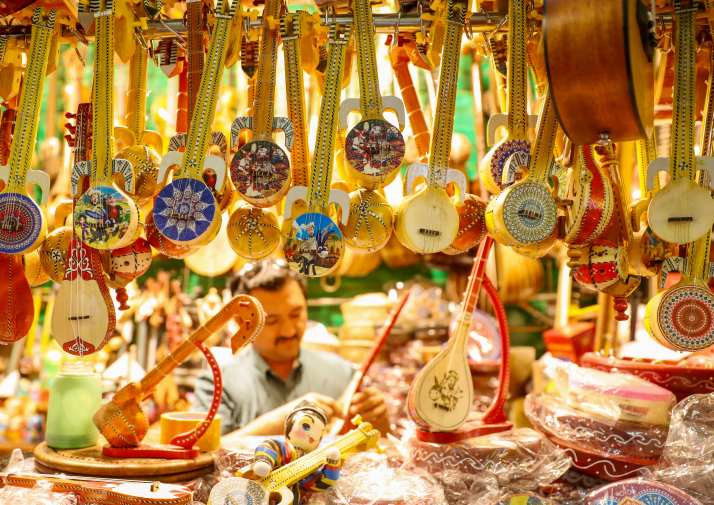 Traditional musical instruments on display at the International Grand Bazaar in Urumqi (VCG)
This was especially clear in group assignments. Despite our different ethnic backgrounds, each of us take on a different role and work closely together. There was no sense of distance between us. On the contrary, our different cultural backgrounds bring a wider range of perspectives to the discussion, making our exchanges much richer and more thoughtful. This experience made me realize that differences do not necessitate distance. On the contrary, it can become a bridge to deeper understanding. Through Roza Festival and the small moments of everyday life, I gradually came to understand one of the most important qualities of Xinjiang's culture: its diversity and inclusiveness. Here, different ethnic groups live together in harmony while preserving their own traditions. This not only broadened my horizons, but also taught me how to respect, appreciate and understand different cultures. For me, my time in Xinjiang has been more than a period of study abroad. It has been a vivid cultural lesson, one whose influence, I believe, will stay with me for years to come. The author is a student from Kyrgyzstan studying at the Xinjiang Normal University in Urumqi Comments to ffli@cicgamericas.com |
|
||||||||||||||||||||||||||||
|